Soups & stews · Nationwide
Yukgaejang
yukgaejang
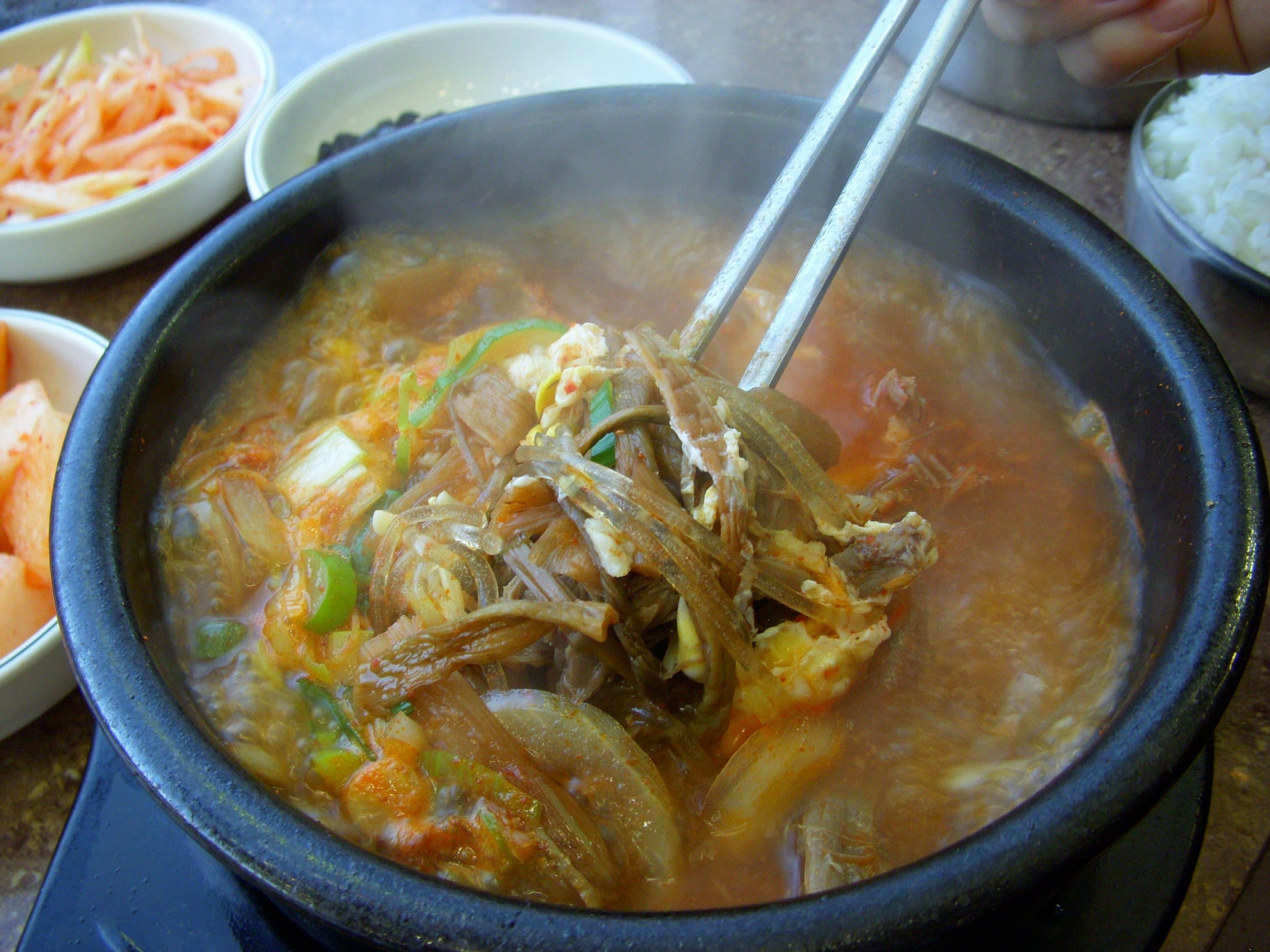
© Wikimedia Commons / LWY · CC BY 2.0
Yukgaejang is a spicy soup of beef torn along the grain and simmered with bracken, scallion and bean sprouts. Tearing rather than slicing is the point: split along the fibres, the broth soaks into the meat. It began as a version of an older soup with beef substituted, and today it is so strongly tied to Korean funeral halls that many people meet it there first.
The name comes from gaejangguk, an old summer restorative soup. Swap the meat for beef and you get yukgaejang — yuk means beef, gaejang is the original dish's name. The cooking method and seasoning were inherited wholesale and only the main ingredient changed, which is why the spicy seasoning, the meat torn along the grain, and the generous bracken and scallion all survive. It is an unusual case of a name carrying its own origin.
The meat is torn for the broth's sake more than the texture's. A knife cuts across the muscle fibres and leaves a smooth face; tearing by hand along the grain leaves a rough surface full of gaps, and broth works into them. That is why the beef in a good yukgaejang releases the soup's flavour when you chew it. Cuts like brisket and shank, coarse-grained and needing long cooking to soften, suit this — and they must be boiled and cooled before tearing for the fibres to separate cleanly.
Bracken and scallion do heavy lifting too. Bracken goes in boiled and rehydrated; it drinks up broth while adding a fibrous chew. Scallion, the white parts cut long and used generously, contributes sweetness and aroma. Bean sprouts or taro stems sometimes join them. The heat is built by frying chili powder in oil to make chili oil and stirring that into the broth — that step is what keeps the spice from turning sharp and floats the red slick on the surface.
There are practical reasons yukgaejang became funeral hall food. When mourners arrive unpredictably, it holds up over long simmering without much loss; one pot feeds many; and served with rice it is a complete meal. Hot, spicy broth also suits people keeping an all-night vigil. For Koreans, then, yukgaejang summons a specific scene before it summons a flavour — and the association is strong enough that plenty of people say they rarely order it otherwise.
What comes with it
- A bowl of rice — the broth is salty and hot, so rice is essential; many people tip the rice straight in.
- Kkakdugi — crisp radish kimchi to reset the mouth after the heat.
- Kimchi — its acidity cuts the weight of the chili oil.
- Steamed egg — a soft layer set against the spicy broth; often served alongside.
- Thin wheat noodles — dropping somyeon into the broth is a common variation.
How to eat it
- 1Tip rice in or spoon broth over it. Sipping broth alone gets salty and hot fast.
- 2Lift the beef onto your rice. Torn along the grain, it holds broth and works as a side dish by itself.
- 3If it is too spicy, add more rice. Adding water makes the chili oil separate and the flavour collapses.
- 4Do not leave the bracken. It holds more broth than anything else in the bowl.
- 5Order somyeon and drop it in — it turns the second half of the meal into a different dish.
FAQ
What does the name yukgaejang mean?
It is gaejangguk — an old summer restorative soup — remade with beef. Yuk means beef and gaejang is the original dish's name. The method and seasoning carried over intact; only the main ingredient changed.
Why is the beef torn rather than sliced?
For the broth. A knife leaves a smooth face, while tearing along the grain leaves a rough one full of gaps that broth soaks into. That is why the meat in a good yukgaejang releases the soup's flavour as you chew.
Why is it served at funerals?
Largely practical reasons. Mourners arrive unpredictably and this holds up over long simmering; one pot feeds many; with rice it is a complete meal. Hot, spicy broth also suits people keeping an all-night vigil.
Can I have it less spicy?
Adding more rice is the best fix. Adding water makes the chili oil separate and the broth falls apart. The heat is set by how much chili oil goes in, so it varies a lot between restaurants.
More dishes to try
태그