Korean regional food
Dishes you've heard of, served on a table you're not sure how to approach. Here's the origin, what each side dish is actually for, and the order locals eat in.
🥢 Street food · Nationwide
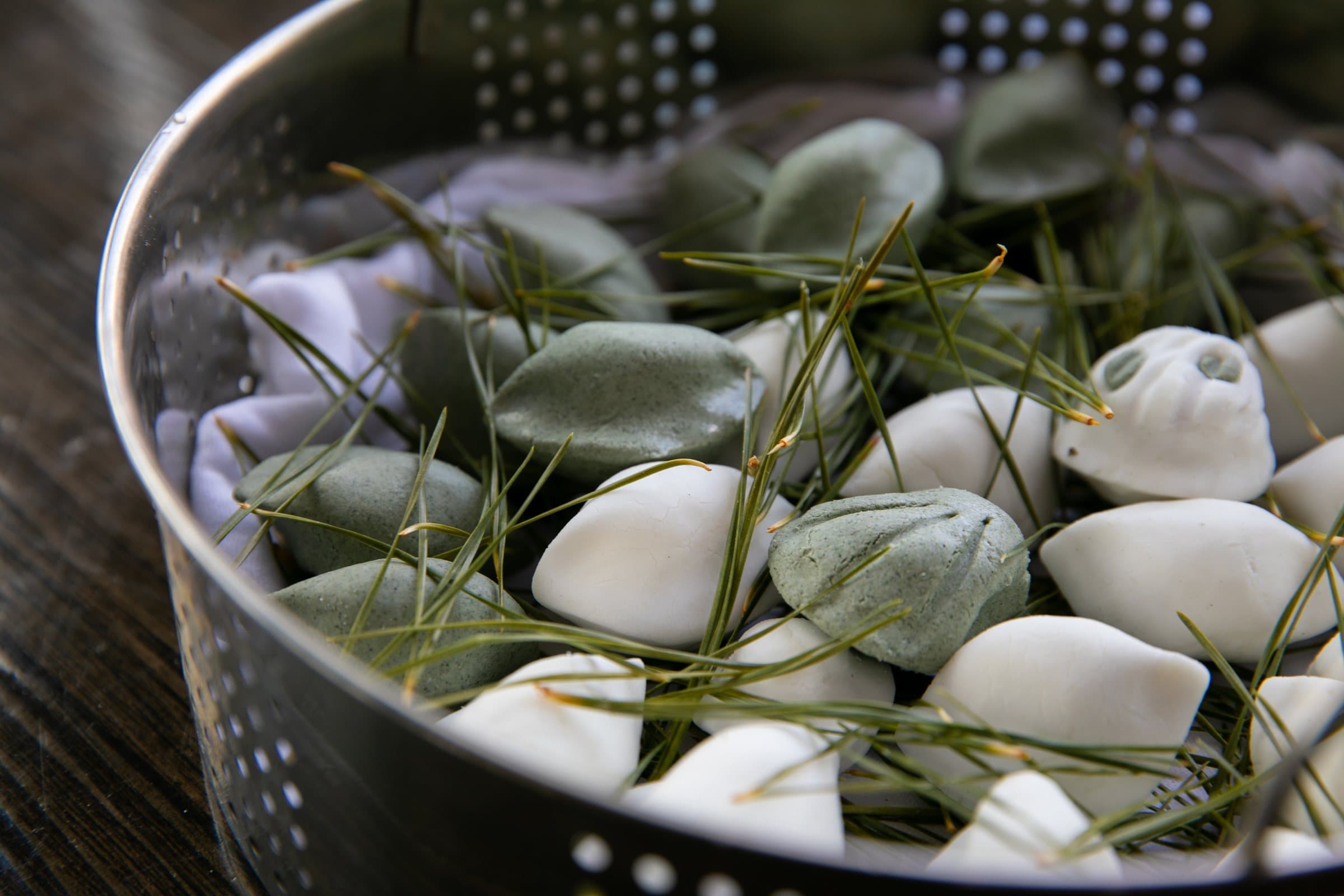
Songpyeon
Songpyeon is a rice cake: rice-flour dough shaped into half-moons around a filling and steamed on a bed of pine needles. It is the food most associated with Chuseok. The song in its name means pine, from the needles laid under the cakes to lend their scent and keep the pieces from sticking together. Fillings run to sesame, red bean, chestnut or beans, and the dough is sometimes tinted with mugwort or gardenia.
🍜 Noodles · Nationwide
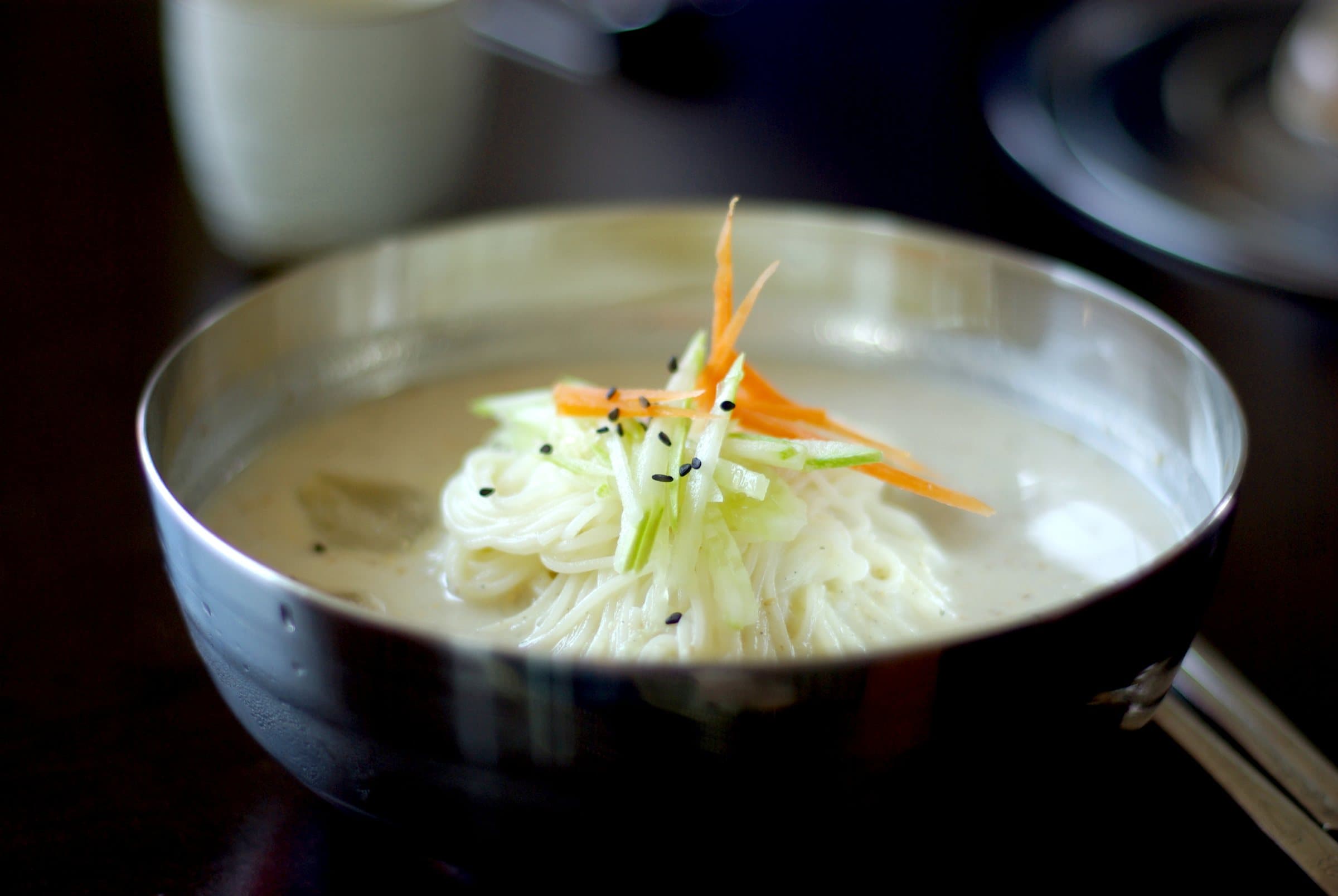
Kongguksu
Kongguksu is a summer dish of noodles in a chilled broth of finely ground boiled soybeans. There is no meat and no stock — the soybean alone makes the liquid, so the quality of the beans and how finely they are ground become the flavour directly. Many places serve it unseasoned for you to salt yourself, and in some regions people add sugar instead, a habit that reliably starts arguments.
🔥 Grilled & stir-fried · Nationwide
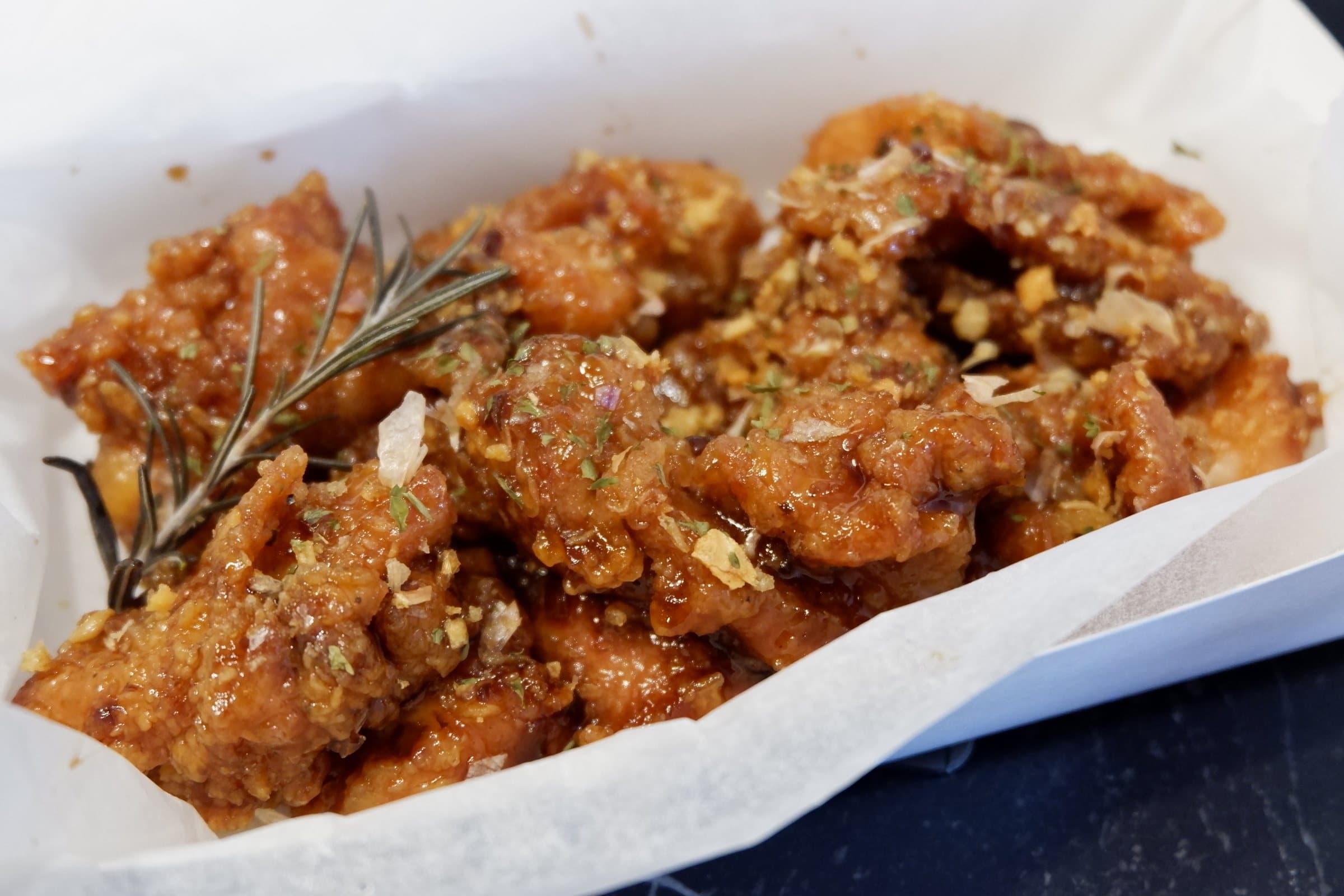
Yangnyeom chicken
Yangnyeom chicken is fried chicken tossed in a red sauce built on gochujang, corn syrup and garlic. The trick is reducing the sauce so it coats thickly without soaking the crust, and most versions lead with sweetness rather than heat. Ordering half plain and half sauced is a common habit, so a single box often arrives holding two different things.
🍲 Soups & stews · Seoul
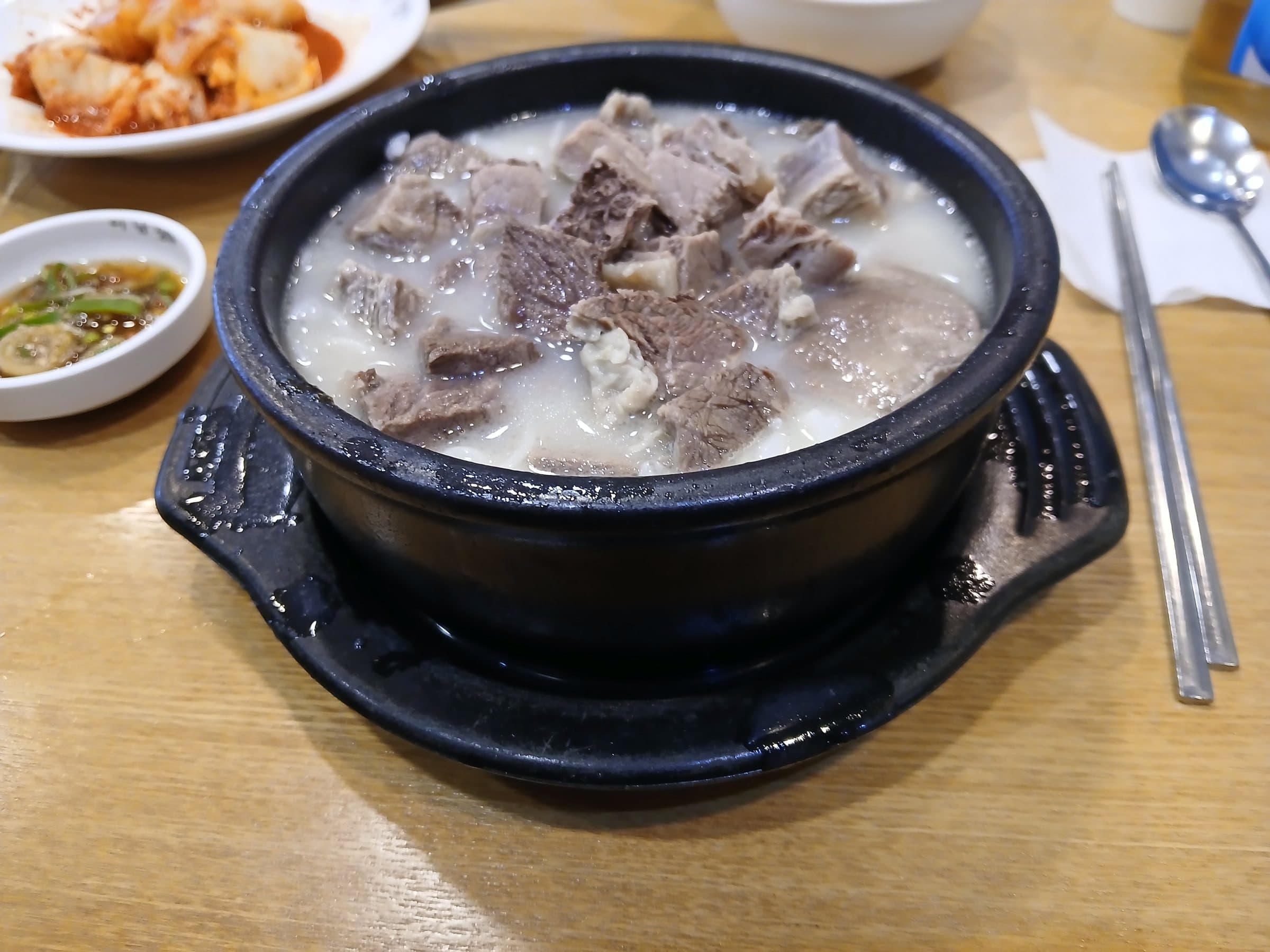
Seolleongtang
Seolleongtang is a Seoul-style rice-and-soup dish in which ox bones and beef are simmered until the broth turns milky white. Its defining trait is that it arrives unseasoned. Salt, pepper and chopped spring onion sit on the table for you to adjust yourself, so the same pot yields a different bowl for every diner. The whiteness comes not from milk or cream but from bone components dispersing finely during the long simmer and scattering light.
🥢 Street food · Nationwide
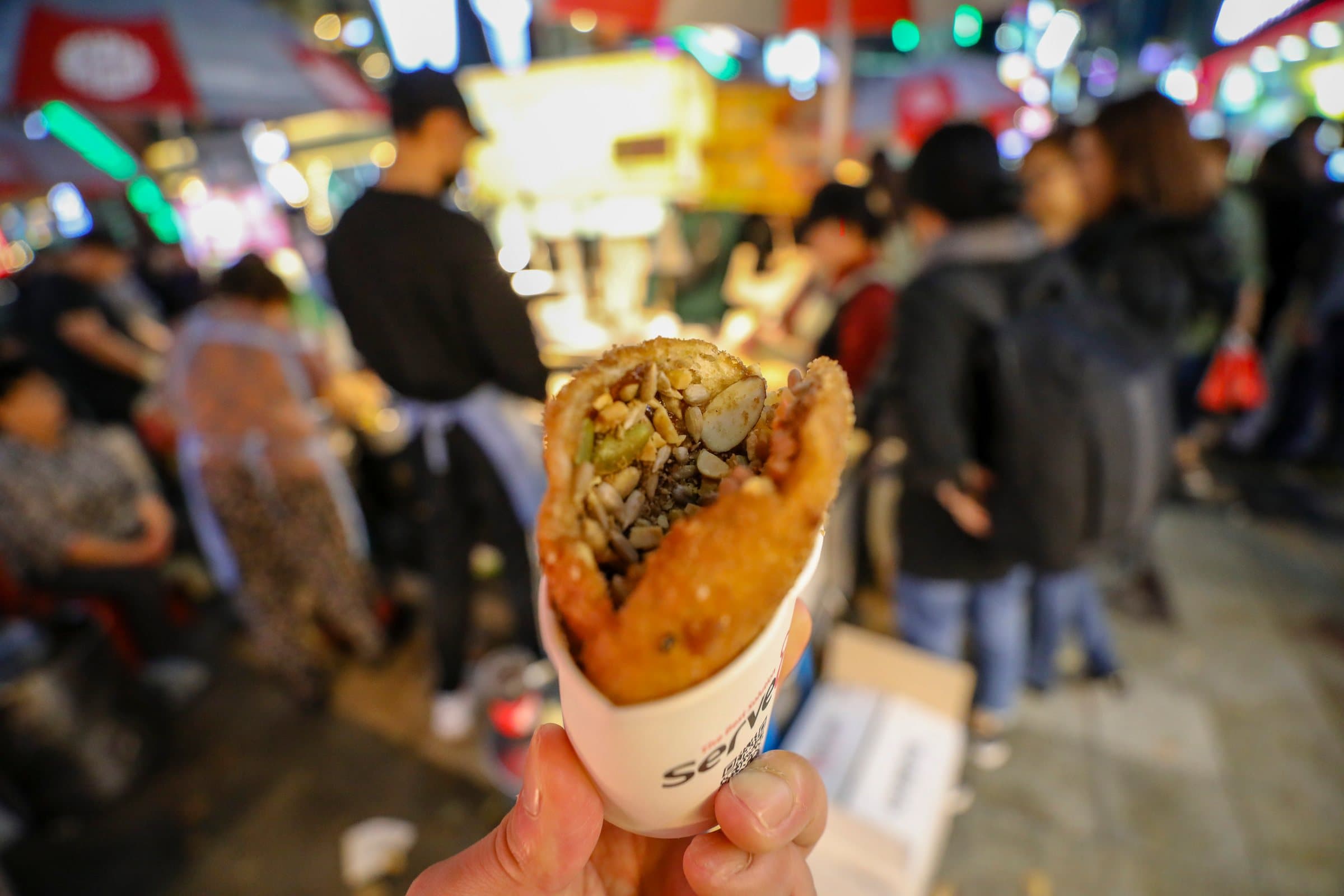
Hotteok
Hotteok is a winter street snack: wheat dough filled with brown sugar and nuts, pressed flat on an oiled griddle. As it cooks the sugar melts into syrup, so the first bite always deserves caution. The ho in its name was a prefix marking things that came from China; wheat foods brought by Chinese immigrants during the port-opening era were sweetened to Korean taste and settled here. Regional versions exist, notably Busan's seed-filled ssiat hotteok.
🥢 Street food · Nationwide
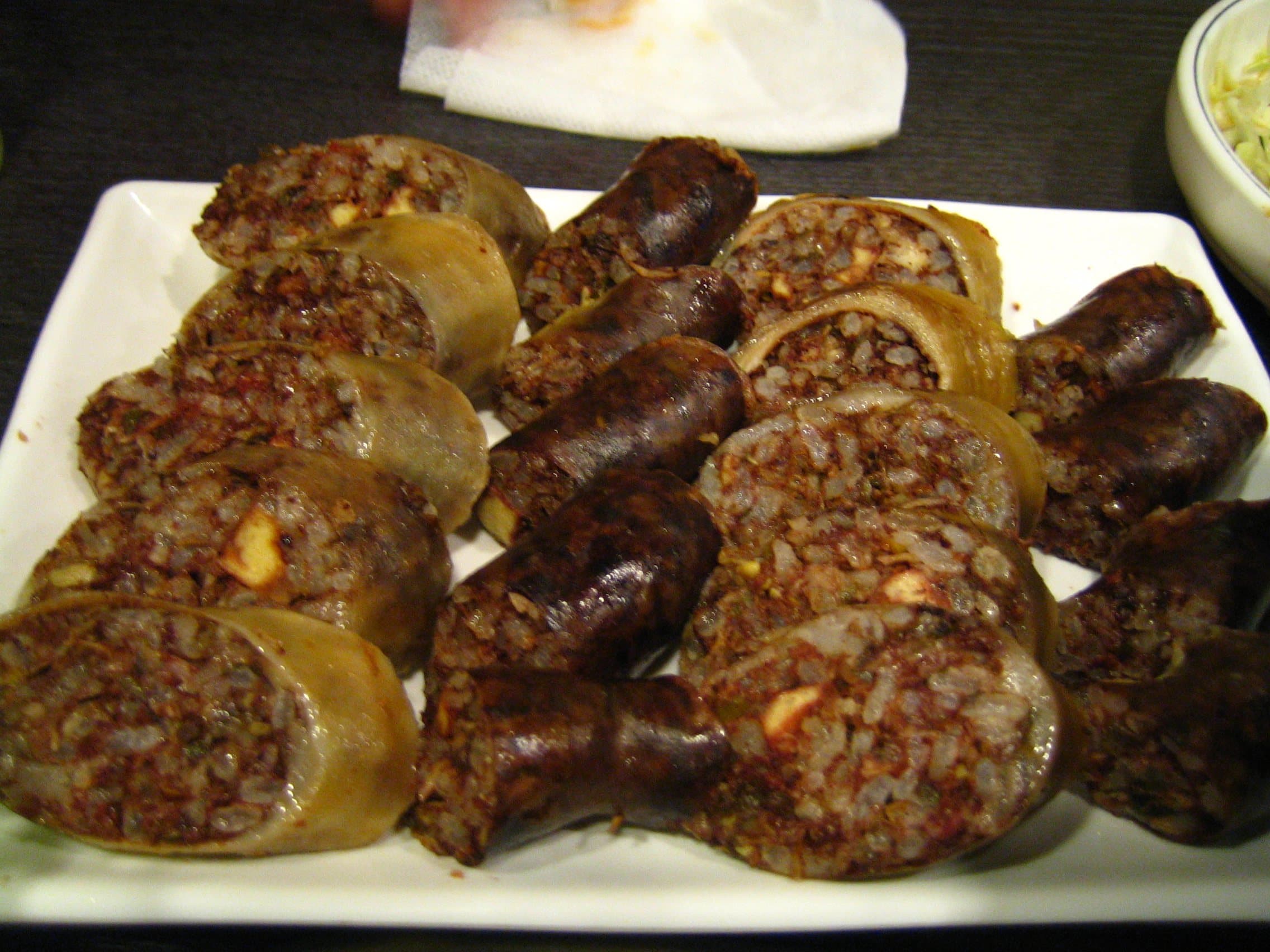
Sundae
Sundae is pig intestine stuffed with glass noodles, blood and vegetables, then steamed. The principle matches European blood sausage, but what goes inside is entirely different. Korean sundae leans on glass noodles, which makes it soft and mild, and regional versions swap in glutinous rice, squid or pollock. At snack shops it sits beside tteokbokki; at markets it arrives as a rice soup.
🍜 Noodles · Gangwon
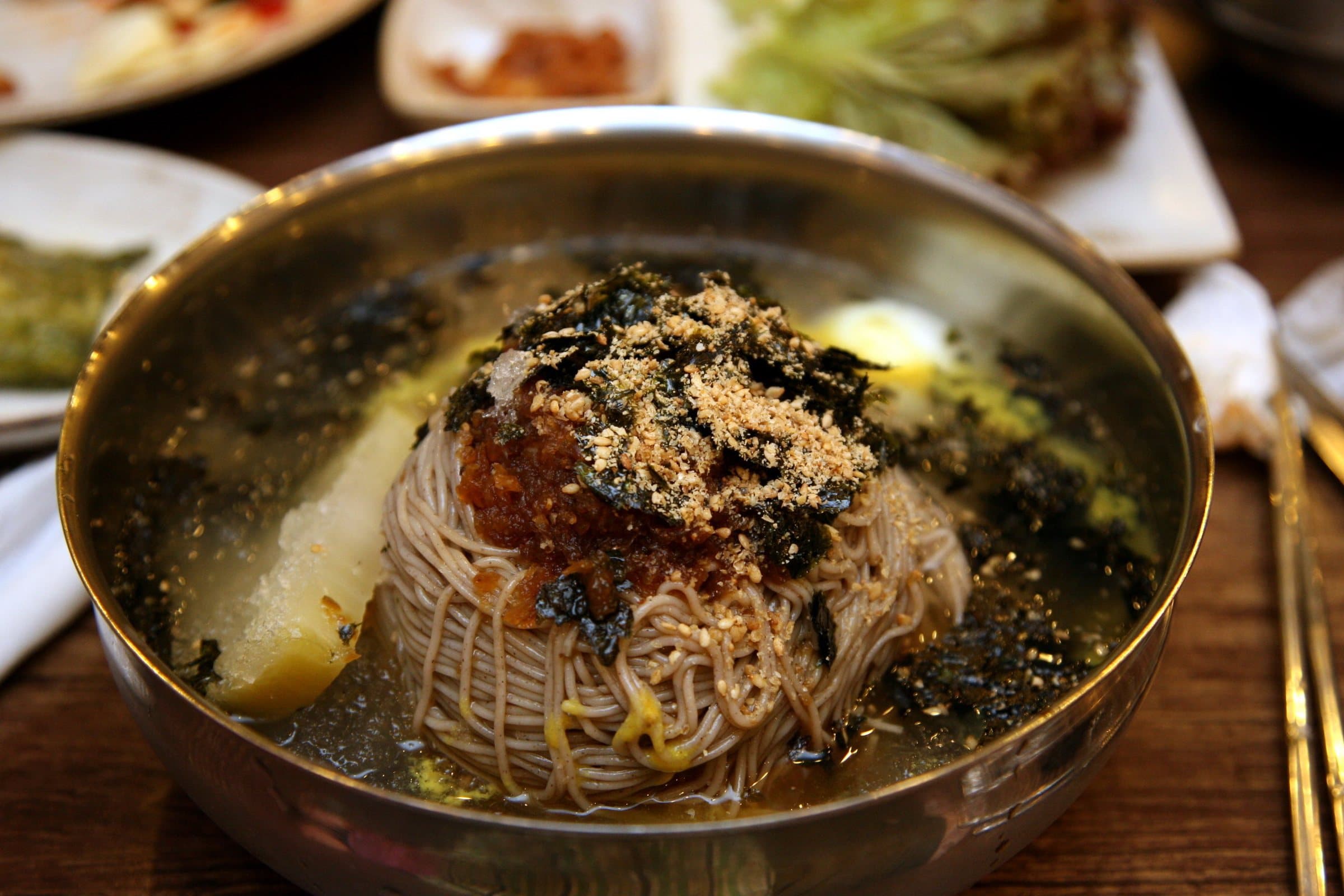
Makguksu
Makguksu is a Gangwon dish of buckwheat noodles served cold, either tossed with sauce or in broth. The mak in its name is usually read as "just now" — buckwheat noodles, unlike wheat, break apart if left standing, so they have to be eaten as soon as they are extruded. It is often compared to naengmyeon, but where naengmyeon is a refined urban dish, makguksu is closer to how mountain communities actually ate buckwheat.
🍲 Soups & stews · Nationwide
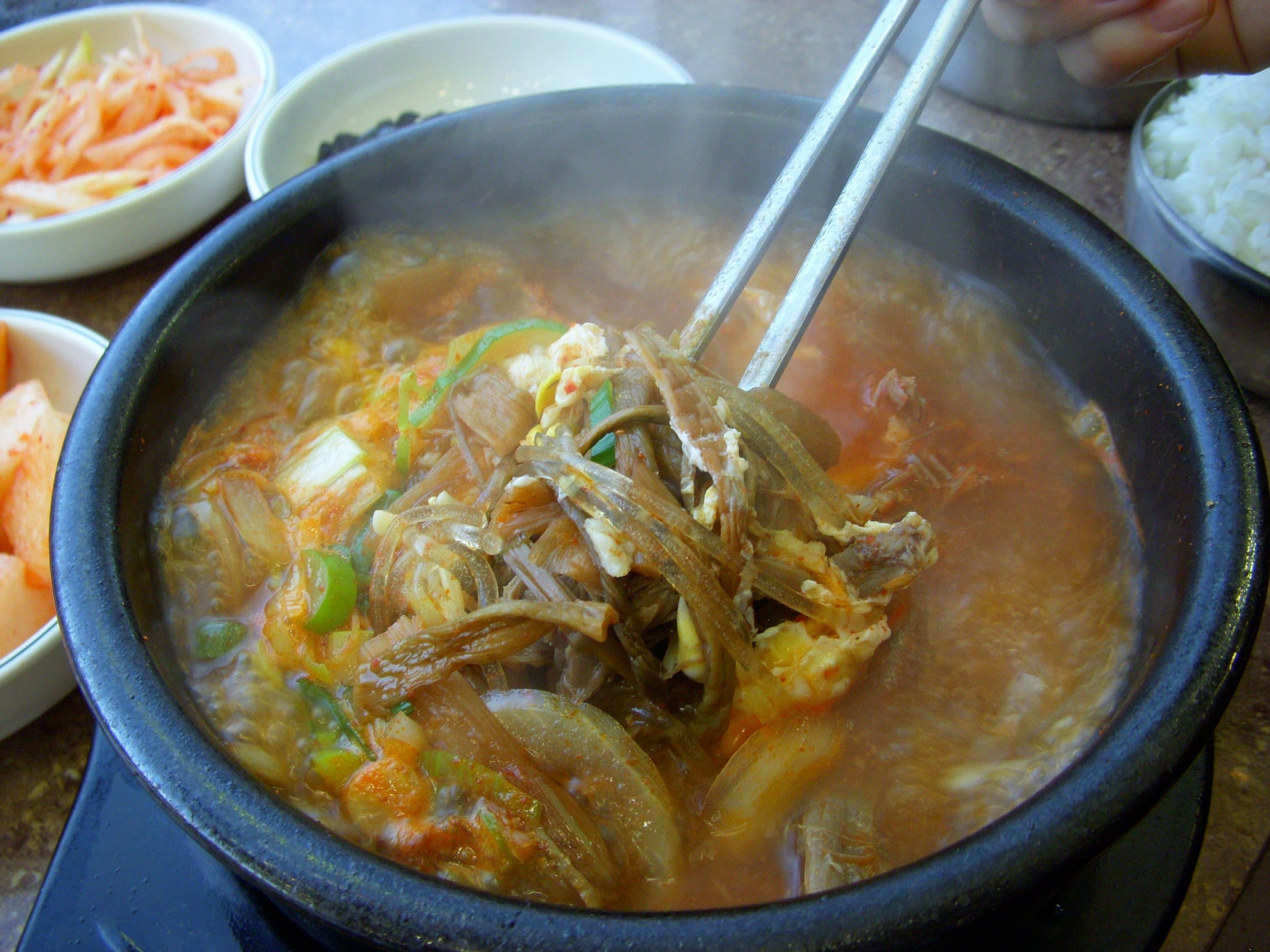
Yukgaejang
Yukgaejang is a spicy soup of beef torn along the grain and simmered with bracken, scallion and bean sprouts. Tearing rather than slicing is the point: split along the fibres, the broth soaks into the meat. It began as a version of an older soup with beef substituted, and today it is so strongly tied to Korean funeral halls that many people meet it there first.
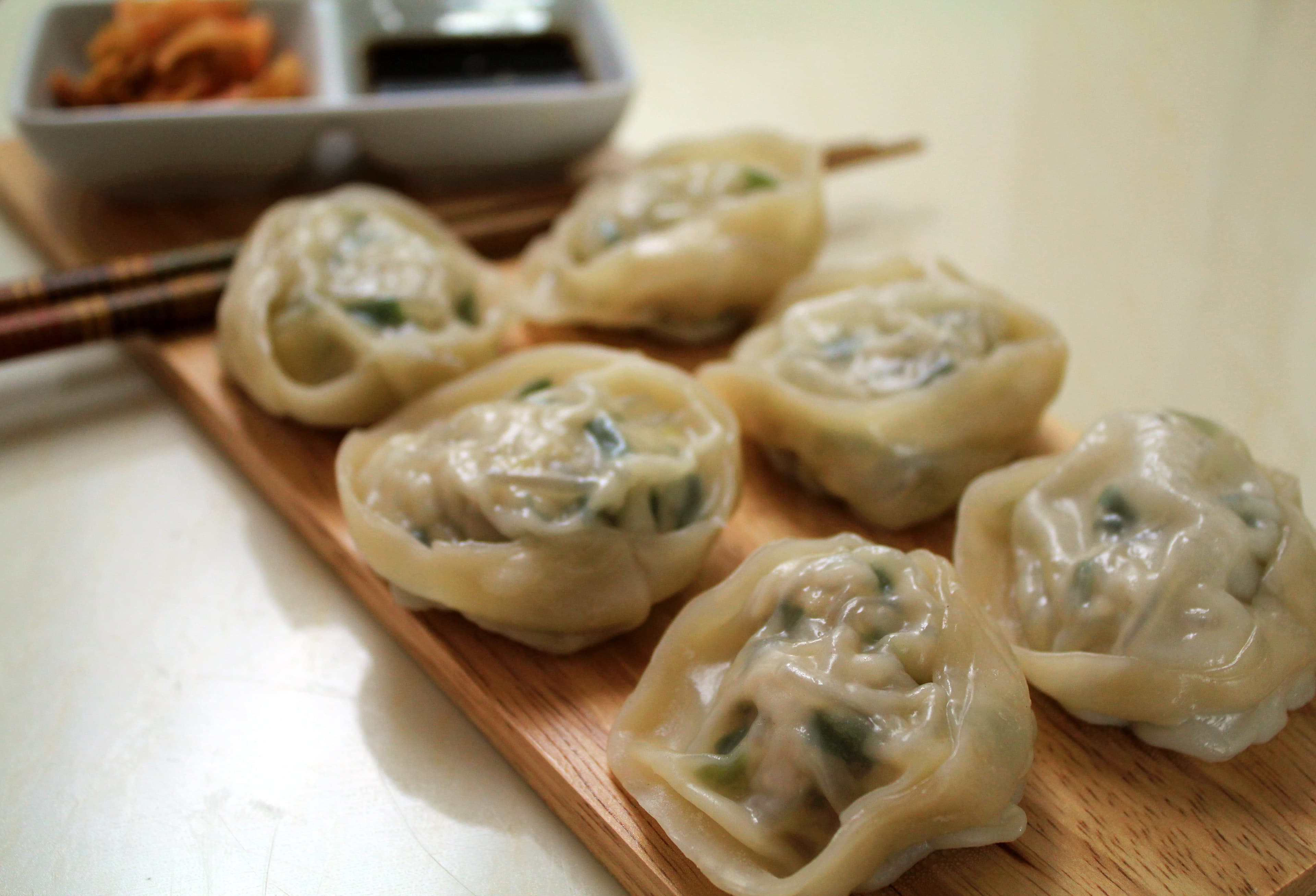
🥢 Street food · Nationwide
Mandu
Mandu is filled dough — steamed, pan-fried, or dropped into soup. What distinguishes the Korean version is what goes into the filling: tofu, glass noodles and mung bean sprouts alongside the meat. Mixing those in began as a way to stretch scarce ingredients, but the effect is a lighter bite that does not tire you after several. Whether mandu belongs in the New Year's rice cake soup divides the country by region.

🍲 Soups & stews · Nationwide
Gamjatang
Gamjatang is a stew built on pork spine simmered for hours. The name puts potato front and centre, but the real subject is the meat clinging to the bones, and picking that meat off is itself part of how the dish works. Perilla seed powder and dried cabbage greens make the broth thick and nutty, and because bones must be worked at, it belongs to a table of several people rather than a quiet solo meal.

🔥 Grilled & stir-fried · Nationwide
Bossam
Bossam is boiled pork eaten wrapped in kimchi or cabbage leaves. The name comes from the verb for wrapping, which tells you the wrapper matters as much as the meat. Because it is simmered rather than grilled, the fat renders away and the result is mild — so the cooking water carries the flavour, often with doenjang, coffee or medicinal herbs added to suppress porkiness. It sits next to jokbal on menus, but the cut and the method are different.

🍲 Soups & stews · Gyeonggi
Budae Jjigae
Budae jjigae began around US army bases just after the Korean War. The starting point was ham and sausage from the base, simmered with kimchi and chili powder; today it has grown into a one-pot dish topped with instant noodles, rice cakes and sliced cheese. Uijeongbu and Songtan in Gyeonggi Province are known for different styles, and the word budae — army unit — still sitting in the name says everything about where it came from.

🍲 Soups & stews · Nationwide
Doenjang Jjigae
Doenjang jjigae is about as basic as a Korean soup gets. Its base is doenjang — soybeans boiled, formed into blocks, fermented, then steeped in brine — simmered with young squash, tofu, potato and onion. Where kimchi jjigae goes for sharpness, this one goes for a mellow, malty depth, which is why it is where people return after a run of spicy food. Home-fermented and commercial doenjang differ enough in salt and aroma that the same recipe produces different results.

🍲 Soups & stews · Nationwide
Kimchi Jjigae
Kimchi jjigae only begins once the kimchi has gone sour. Made with fresh kimchi it tastes flat; it needs mukeunji, kimchi aged past six months, before the broth gains any depth. That is why Korean households never throw sour kimchi away — they push it to the back of the fridge. Pork, canned tuna or saury each take the stew in a different direction, and every version is built on the assumption that a bowl of rice is coming.

🍜 Noodles · Nationwide
Kalguksu
Kalguksu literally means knife noodles. The dough is rolled thin, folded and cut by hand, so the strands vary slightly in thickness and their squared edges hold broth well. Unlike extruded noodles they keep surface flour, which thickens the soup when they are boiled directly in it. Clam, chicken or ox-bone stock each produce a completely different bowl, though sliced young squash and a pinch of shredded seaweed are near-universal.

🔥 Grilled & stir-fried · Seoul
Jokbal
Jokbal is pig's trotter simmered for hours in soy sauce and aromatics, then sliced and served. The long cook converts the collagen around the bone into gelatin, which is where the springy, slightly sticky texture comes from — and it firms up as it cools, making that texture more pronounced. Jangchung-dong in Seoul is known as the jokbal street, and today it is a staple of late-night delivery. Salted shrimp always comes alongside, and it does more than add salt.

🍲 Soups & stews · Nationwide
Sundubu Jjigae
Sundubu jjigae is a stew built on tofu that was never pressed into a block. Because it stops before the shaping stage, it breaks apart softly under a spoon and lets the chili-oil broth soak straight in. It arrives at the table in a stone pot still violently bubbling, and the Korean move is to crack a raw egg into it immediately and let the residual heat cook it. Seafood, pork or kimchi versions all exist, but the softness of the tofu is always the point.

🍜 Noodles · Nationwide
Japchae
Japchae is a fixture at Korean celebrations, yet the glass noodles everyone pictures are not in the name at all — japchae literally means mixed vegetables. When it first reached the royal court in the 17th century it was a stir-fried vegetable dish; the sweet-potato starch noodles only joined in the 20th century. Chewy noodles seasoned with sesame oil and soy sauce carry spinach, carrot, onion, mushroom and beef, and the proper method is to cook each ingredient separately and combine them at the very end.

🍚 Rice bowls · Nationwide
Gimbap
In Korea, gimbap is practically a synonym for packed lunch. It was what your mother rolled at dawn on field-trip day; now it's what you grab for around 3,000 won at a 24-hour gimbap shop. The rice is seasoned with sesame oil and salt rather than vinegar — the decisive difference from Japanese maki — which is exactly why it survives a few hours at room temperature. Swap the filling to tuna, cheese, bulgogi or all-vegetable and you effectively have a different dish.

🔥 Grilled & stir-fried · Busan
Haemul-pajeon (Seafood & Scallion Pancake)
When it rains in Korea, one combination fires automatically in everyone's head: pajeon and makgeolli. It's a pancake built on a bed of scallions, loaded with squid, shrimp and mussels, and shallow-fried in a generous slick of oil. Busan's Dongnae district has its own version, using whole scallions and finishing with beaten egg for a softer, wetter texture. The edges are always the crispiest part, so cut it with scissors the moment it lands and drink makgeolli alongside.

🔥 Grilled & stir-fried · Nationwide
Samgyeopsal (Grilled Pork Belly)
That smoky, savoury smell drifting down Korean streets at dinnertime? That's samgyeopsal. The name literally means 'three-layered flesh' — pork belly with its bands of fat and lean — grilled unmarinated right at your table. The whole point is the ssam: a lettuce leaf, a perilla leaf, a slice of pork, ssamjang, garlic, folded and eaten in one bite. Most places have a two-portion minimum, and the proper ending is fried rice cooked in the leftover pork fat.

🥬 Banchan & ferments · Nationwide
Kimchi
Kimchi is the reason many Korean homes own a second refrigerator. Napa cabbage kimchi makes up over 70% of what's sold, but there are more than 200 varieties — cubed radish kkakdugi, whole young radish chonggak, chili-free baek-kimchi, and the brothy dongchimi. Kimjang, the late-autumn ritual of making a year's supply together, was inscribed on UNESCO's Intangible Cultural Heritage list in 2013. Fresh kimchi is eaten raw and crunchy; once it turns sour, Koreans stop eating it plain and start cooking with it.

🍜 Noodles · Nationwide
Naengmyeon (Korean Cold Noodles)
Korea's most famous summer dish was originally eaten in the dead of winter in the country's north. It splits into two camps: Pyongyang naengmyeon serves buckwheat noodles in a restrained beef or radish-water broth, while Hamhung naengmyeon uses chewy sweet potato starch noodles tossed in a fiery sauce. First-timers often find the Pyongyang broth disappointingly plain — that plainness is the entire point. The pot of hot noodle water and the half boiled egg on the table both have reasons behind them too.

🥢 Street food · Seoul
Tteokbokki (Spicy Rice Cakes)
It's Korea's most recognisable red street snack today, but tteokbokki started life as a royal court dish braised in soy sauce. The gochujang version is surprisingly recent — it was born in Seoul's Sindang-dong right after the Korean War. The standard bowl is cylindrical rice cakes simmered in chilli paste with fish cake, boiled egg and scallion, and Koreans still argue about whether wheat-flour or rice-flour cakes are superior. The proper bunsik-shop order pairs it with fritters and blood sausage — the trio locals call tteok-twi-sun.

🔥 Grilled & stir-fried · Gangwon
Dakgalbi (Chuncheon Stir-fried Chicken)
The name says 'ribs' but there isn't a single rib in it. Dakgalbi is boneless chicken thigh in gochujang marinade, dumped onto a huge cast-iron griddle with cabbage, sweet potato, rice cakes and perilla leaves, then stir-fried right at your table. It started as a cheap drinking snack in 1960s Chuncheon and became Gangwon Province's signature dish. The real finale isn't the chicken — it's the fried rice you make in the leftover sauce at the end. Most places have a two-portion minimum, so check ahead if you're dining solo.

🍲 Soups & stews · Seoul
Samgyetang
If you ever see a queue outside an old Seoul restaurant on the hottest day of the year, everyone inside eating boiling-hot soup, that's samgyetang. A whole young chicken is stuffed with glutinous rice, garlic, jujube and ginseng, then simmered and served in its own earthenware pot. The broth arrives deliberately unsalted — that's not a mistake, it's why there's a dish of salt on the table for you to season it yourself. It's the signature restorative eaten on Korea's three hottest days, though specialist restaurants serve it year-round.

🔥 Grilled & stir-fried · Nationwide
Bulgogi
If you want the safest entry point into Korean meat dishes, it's bulgogi. The name is bluntly literal — 'fire meat' — but the flavor is sweet and savory rather than spicy: soy sauce, grated pear, garlic, sesame oil. The key difference from samgyeopsal is that the thin beef is marinated before it ever hits heat. The Seoul style simmers it in a shallow pool of broth with glass noodles; the Eonyang and Gwangyang styles sear it hard on a wire grill over charcoal. Wrapping it in lettuce is standard, and frying rice in the leftover sauce is the expected finale.

🍚 Rice bowls · Jeolla
Bibimbap
It arrives looking almost too good to touch — and then you're supposed to wreck it with a spoon. Five or six seasoned vegetables, an egg, and a dollop of gochujang sit on rice in a deliberate color arrangement, and thirty seconds of mixing from the bottom up turns it into something completely different. Jeonju is the home version: rice cooked in beef bone broth, topped with yellow mung bean jelly and local soybean sprouts, noticeably richer than bibimbap elsewhere. The chili paste comes on the side, so you control the heat entirely, and a bowl of soybean sprout soup always comes with it.
Korean meals rarely stop at one plate. Order a single bowl of soup and it arrives with kkakdugi, salted shrimp, and seasoned chives — and each of those has a job, whether cutting through fat or adjusting the seasoning. So what you eat matters less than what you eat it with, and in what order.
This section documents what actually lands on the table for each dish: which side dishes appear and why, whether a sauce is poured or dipped, and when to order the fried rice finish at places that do one. Obvious to anyone who grew up here, and almost never explained to anyone who didn't.
Regional differences are covered too. The same dish changes colour, salt level, and accompaniments between Seoul, Busan, and Jeonju. If you're travelling, some dishes only show up in their true form in one place — so we've linked the relevant destinations.