Street food · Nationwide
Hotteok
hotteok
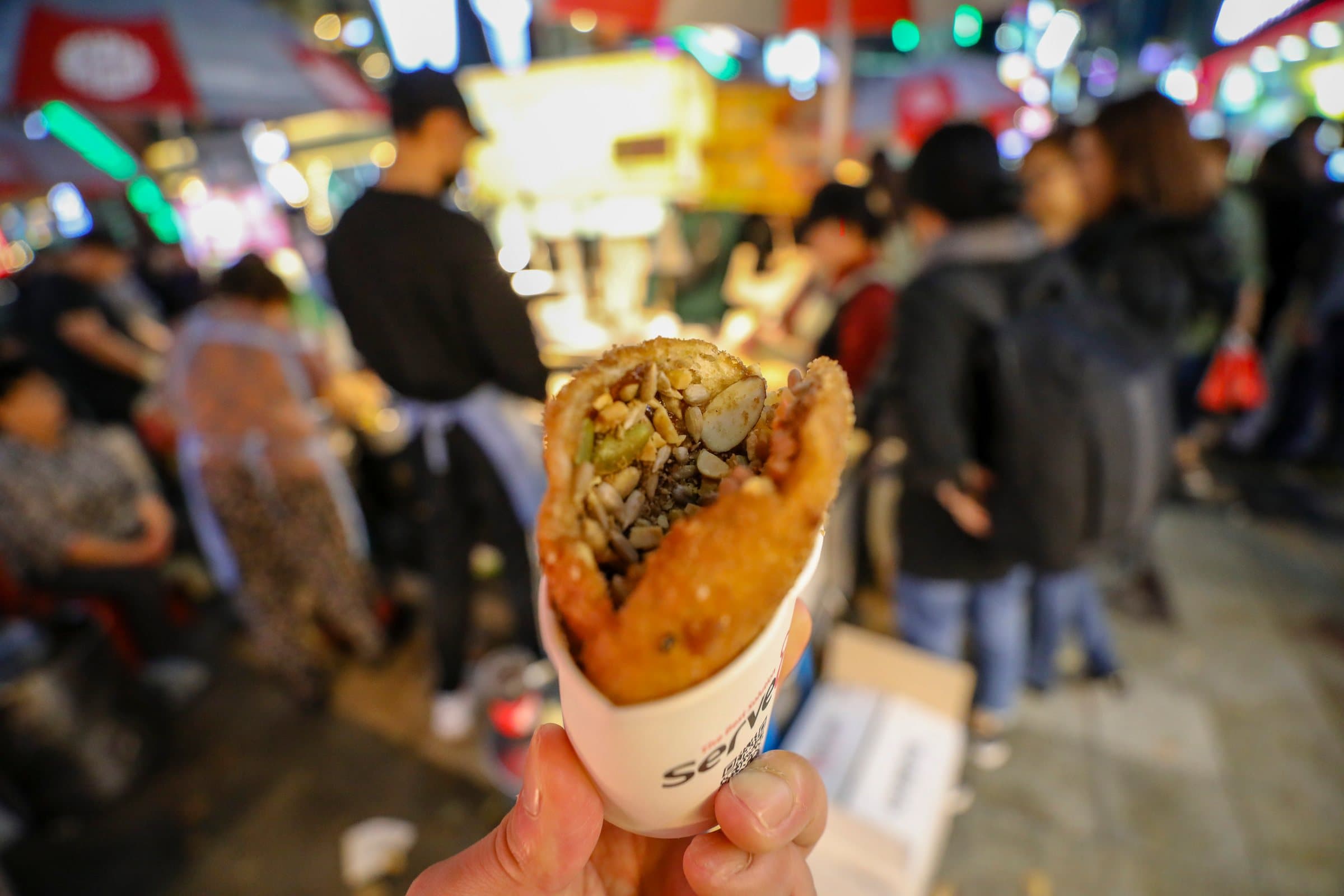
© Wikimedia Commons / bryan · CC BY-SA 2.0
Hotteok is a winter street snack: wheat dough filled with brown sugar and nuts, pressed flat on an oiled griddle. As it cooks the sugar melts into syrup, so the first bite always deserves caution. The ho in its name was a prefix marking things that came from China; wheat foods brought by Chinese immigrants during the port-opening era were sweetened to Korean taste and settled here. Regional versions exist, notably Busan's seed-filled ssiat hotteok.
The ho in hotteok was a prefix marking things that arrived from China; several Korean words carry it. Chinese immigrants during the port-opening era brought wheat-based foods, and among them the technique of filling dough and griddling it was sweetened in Korea into what hotteok is now. China has comparable filled flatbreads, but the version that runs with molten brown-sugar syrup took its shape here.
The dough decides the result. Wheat flour is blended with glutinous rice flour or gluten and leavened with yeast; proper fermentation is what gives a crisp exterior over a chewy interior. Under-ferment and it turns hard, over-ferment and it soaks oil and goes limp. The standard filling is brown sugar with cinnamon and chopped nuts, and that sugar melts under heat into syrup. This is why biting into a fresh hotteok and scalding the roof of your mouth is such a common experience.
Busan's ssiat hotteok is the best-known variation. The finished hotteok is split open and a spoonful of seeds — sunflower, pumpkin, peanut — is packed inside, adding nuttiness and crunch to the syrup's sweetness. Served in a paper cup, it is easy to eat while walking, and the format that took root around Nampo-dong in Busan now appears in other cities too. Elsewhere you find green tea or black rice worked into the dough, or savoury versions filled with japchae.
Hotteok is seasonal. Stalls multiply along the streets as the weather turns cold and thin out in spring, because the whole point is eating it hot. The gap between fresh, with the syrup still molten, and cooled, with everything set, is wider than for most snacks. That makes eating on the spot vastly better than taking it away — and people standing in front of a stall holding a paper cup has become a familiar scene of the Korean winter street.
What comes with it
- A paper cup — it comes folded in one so the syrup does not run onto your hands.
- Seeds — the Busan style splits the cooked hotteok and packs in sunflower, pumpkin and peanut.
- Fish cake broth — the classic winter stall pairing; something salty after the sweetness.
- A warm drink — the syrup is scalding, so a hot drink oddly slows you down in a helpful way.
- Tteokbokki — often sold at the same street stall.
How to eat it
- 1Be careful with the first bite — the sugar inside has melted into syrup and burns easily.
- 2Start at the edge to let the steam out; biting the middle first sends the syrup rushing out.
- 3Hold it with the paper cup still folded around it, so the syrup does not run onto your hand.
- 4Eat it on the spot. Once cool the syrup sets and the dough goes limp, and the difference is stark.
- 5In Busan, try ssiat hotteok — the seeds add nuttiness and crunch and change its character.
FAQ
What does the ho in hotteok mean?
It was a prefix marking things that came from China; several Korean words use it. Wheat foods brought by Chinese immigrants during the port-opening era were sweetened to Korean taste, and that became hotteok.
Why is it so hot?
The brown sugar inside melts under heat into syrup, and syrup is far hotter than the dough and slow to cool. The outside can feel manageable while the inside will still scald you. Starting at the edge to vent the steam is the safer approach.
What makes ssiat hotteok different?
It is the Busan variation: the cooked hotteok is split open and a spoonful of seeds — sunflower, pumpkin, peanut — is added. The nuttiness and crunch alongside the syrup change its character considerably.
Can I take it away?
You can, but it is not recommended. Once cool the syrup sets and the dough absorbs oil and goes limp, and the gap from freshly cooked is wider than with most snacks. Eating on the spot is vastly better.
Pair it with a visit
More dishes to try
태그