Street food · Nationwide
Mandu
mandu
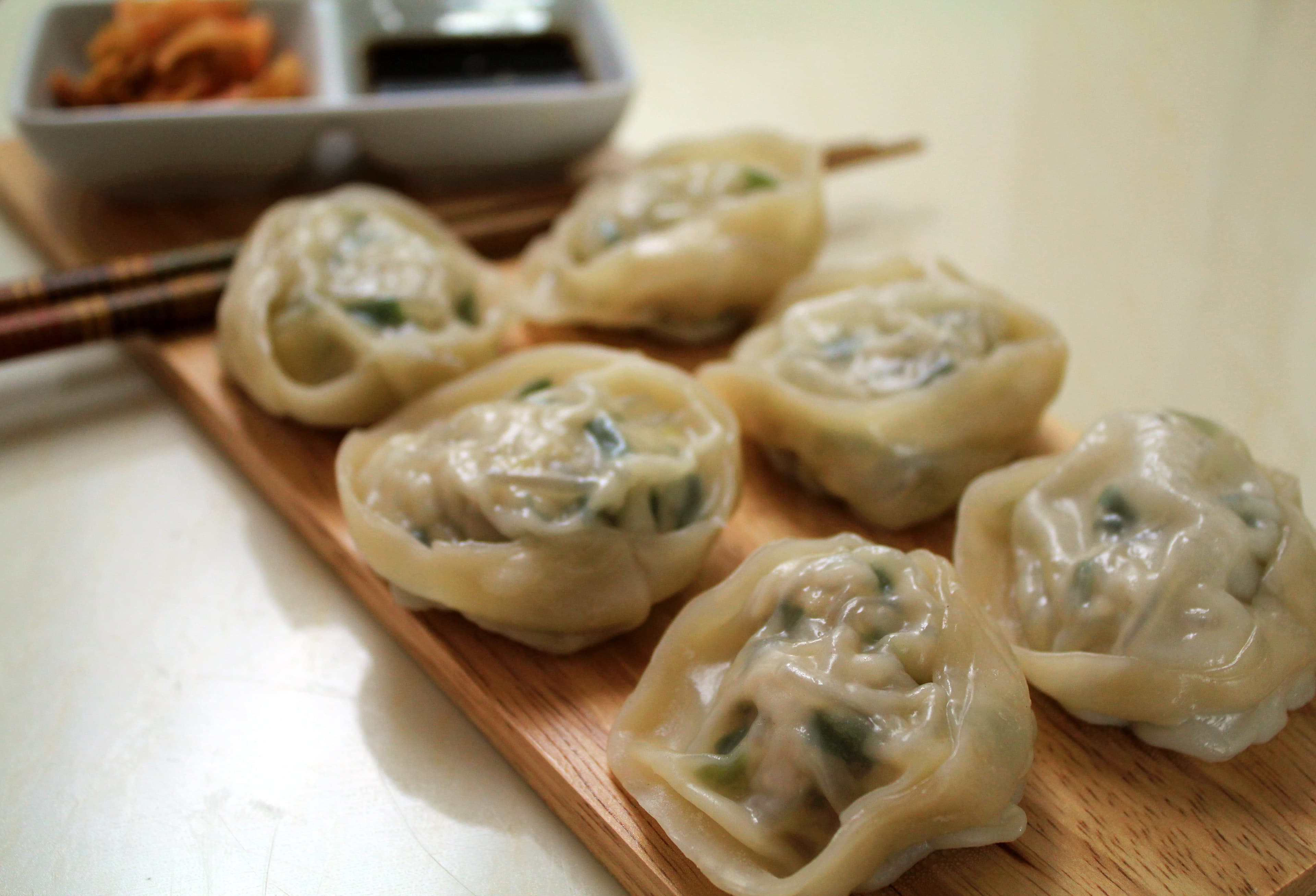
© Wikimedia Commons / Chloe Lim · CC BY 2.0
Mandu is filled dough — steamed, pan-fried, or dropped into soup. What distinguishes the Korean version is what goes into the filling: tofu, glass noodles and mung bean sprouts alongside the meat. Mixing those in began as a way to stretch scarce ingredients, but the effect is a lighter bite that does not tire you after several. Whether mandu belongs in the New Year's rice cake soup divides the country by region.
Open a Korean mandu and the proportion of meat is lower than you would expect. Minced pork is bulked out with crumbled tofu, chopped glass noodles, and blanched mung bean sprouts or garlic chives wrung dry. A kimchi version adds finely chopped kimchi on top of that. The ratio began as a way to stretch meat, but it has become the identity of Korean mandu: tofu brings softness, glass noodles chew, sprouts crunch — three textures inside a single bite.
Managing moisture decides everything. Tofu is wrapped in cloth and squeezed hard; blanched sprouts and chives are wrung out by hand; kimchi is pressed before it goes in. Any water left behind seeps out of the filling, softens the wrapper, and either splits the dumpling while folding or leaves it soggy underneath while steaming. Well-made mandu keeps a taut skin after cooking and does not sag to one side when lifted with chopsticks.
The cooking method changes both name and character. Steamed mandu has a soft skin and delivers the filling straight; pan-fried mandu crisps the base for contrast. Mul-mandu are small with thin wrappers, boiled and eaten with their broth, and manduguk finishes them in stock as a soup. The same filling feels like a different dish under a different method, because the wrapper thickness and the role of water both change.
The Lunar New Year splits the country. In the north it is normal to put mandu into the rice cake soup, making tteok-manduguk; further south, many households use rice cakes alone. Regions with stronger northern culinary roots also tend to fold larger dumplings with more generous filling. Kaesong-style mandu are shaped nearly fist-sized, and in Gangwon the practice of making wrappers from buckwheat flour survives. It is a dish whose regional variations run unusually wide under one name.
What comes with it
- Vinegar soy dipping sauce — soy sauce with a little vinegar and chili flakes; the dumplings themselves are lightly seasoned.
- Kimchi — a crisp, sour counterpoint to the softness of steamed mandu.
- Soup stock — when eaten as manduguk, they finish in anchovy or beef stock.
- Rice cake soup — at Lunar New Year many regions simmer them together as tteok-manduguk.
- Chili dipping sauce — some places serve a slightly spicy sauce with the pan-fried version.
How to eat it
- 1Dip lightly in vinegar soy. The dumplings are seasoned on the assumption that you will.
- 2Eat steamed mandu as soon as they arrive; once cool the wrapper stiffens and they stick together.
- 3Do not set pan-fried mandu crisp-side up — rising steam softens it.
- 4Rather than eating one whole, halve it first to check the filling; the hot juices can burn.
- 5Freeze leftovers and drop them into soup later. They revive better in broth than by re-steaming.
FAQ
How does Korean mandu differ from Chinese dumplings?
The filling composition. Korean mandu mixes tofu, glass noodles and bean sprouts into the meat, which lightens the bite and delivers softness, chew and crunch in sequence. The ratio began as a way to stretch meat and has become the defining trait.
Why wring out the moisture so thoroughly?
Because leftover water seeps from the filling, softens the wrapper, and either splits the dumpling as you fold or leaves it soggy underneath while steaming. Tofu is squeezed in cloth, blanched sprouts and chives are wrung by hand, and kimchi is pressed before use.
Do Koreans put mandu in the New Year soup?
It depends on region. Northern practice is to include both rice cakes and mandu, making tteok-manduguk; many southern households use rice cakes alone. Areas with stronger northern culinary roots also tend to fold larger dumplings.
What should I do with leftovers?
Freeze them and use them in soup. Re-steaming tends to toughen the wrapper, whereas broth softens it again. Frozen mandu go straight into boiling stock without thawing.
More dishes to try
태그