Street food · Nationwide
Songpyeon
songpyeon
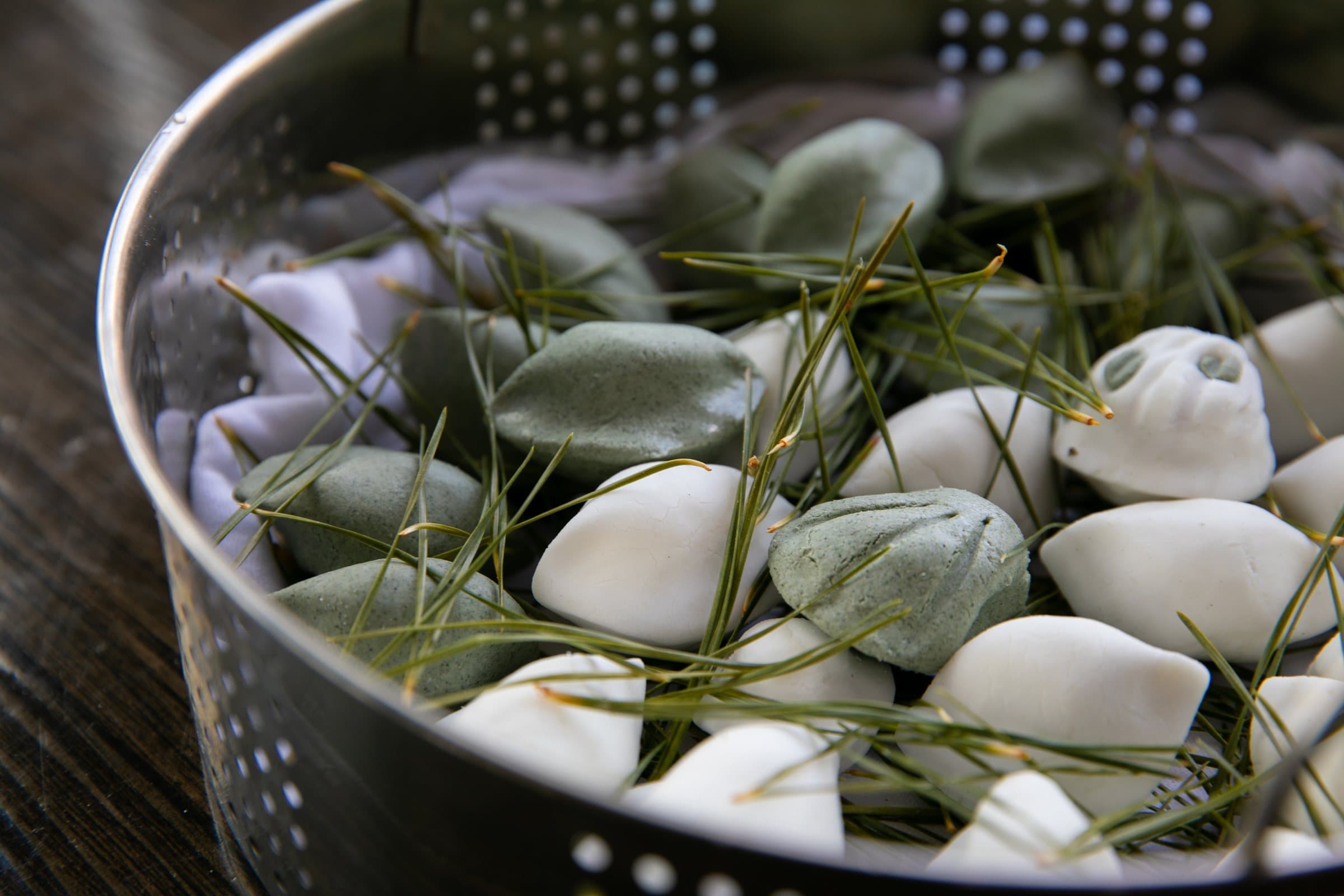
© Wikimedia Commons / korea.net · CC BY-SA 2.0
Songpyeon is a rice cake: rice-flour dough shaped into half-moons around a filling and steamed on a bed of pine needles. It is the food most associated with Chuseok. The song in its name means pine, from the needles laid under the cakes to lend their scent and keep the pieces from sticking together. Fillings run to sesame, red bean, chestnut or beans, and the dough is sometimes tinted with mugwort or gardenia.
The name carries the method. Song means pine, and pine needles really are spread across the bottom of the steamer with the cakes set on top. There are two reasons for that. One is scent: as steam rises, a faint pine note settles into the surface of the dough. The other is practical — the needles hold the cakes apart so they do not fuse into one mass.
The half-moon shape comes with its own account: rather than a full moon, the cakes are shaped as a moon still filling out. Regional shapes vary considerably, though. Seoul and Gyeonggi tend toward small and slender, Gangwon has a potato-starch version, and parts of Jeolla shape them like flowers. Colour varies too — white, green from mugwort, yellow from gardenia, pink from omija.
The filling sets the character. Sesame mixed with sugar runs out when you bite in; red bean paste is heavy and settled; chestnut or jujube gives something to chew. Boiled beans seasoned with salt are also common, and that version is barely sweet at all. The dough must be made with non-glutinous rice flour and hot water so it binds; rush that step and the cakes crack as you shape them.
Songpyeon was also something a family made together at Chuseok, sitting in a circle. An old saying holds that shaping pretty songpyeon means you will have a pretty daughter. These days most people buy them, but rice cake shops still pile them up as the holiday approaches and they still reach the holiday table. They are best warm from the steamer; once cool they firm up, and a brief re-steam brings much of the original texture back.
What comes with it
- Pine needles — laid under the cakes in the steamer for scent and to stop sticking. Not eaten.
- Sesame oil — brushed on thinly after steaming for shine and to slow the cakes firming up.
- Sikhye — the sweet rice drink served at holidays; it rinses away the density of the cake.
- Sujeonggwa — a cinnamon and ginger punch, another standard holiday accompaniment.
- Tea — something slightly bitter pairs well with the sweeter fillings.
How to eat it
- 1Eat them warm — the texture gap between fresh from the steamer and cooled is wide.
- 2Remove the pine needles. They are there for scent and separation, not for eating.
- 3Do not take too large a bite at once; a sesame filling will run out.
- 4Try different fillings. Sesame, red bean, chestnut and beans read as almost different cakes.
- 5If they have cooled, re-steam briefly. A steamer restores texture better than a microwave.
FAQ
Are the pine needles edible?
No. They line the steamer to lend scent and keep the cakes from sticking together. Peel them off once the steaming is done.
Why the half-moon shape?
The common account is that the cakes are shaped as a moon still filling out rather than one already full. Actual shapes vary by region, though — some slender, some formed like flowers.
What goes inside?
Sesame with sugar, red bean, chestnut, jujube or boiled beans. Sesame runs when bitten, red bean is dense, and salted bean filling is barely sweet at all. The filling changes the character considerably.
What do I do with cooled songpyeon?
Re-steam them briefly. Rice cakes firm up as they cool, and a steamer brings much of the original chew back. A microwave tends to toughen them unevenly, so the steamer is better.
Pair it with a visit
More dishes to try
태그