Street food · Nationwide
Sundae
sundae
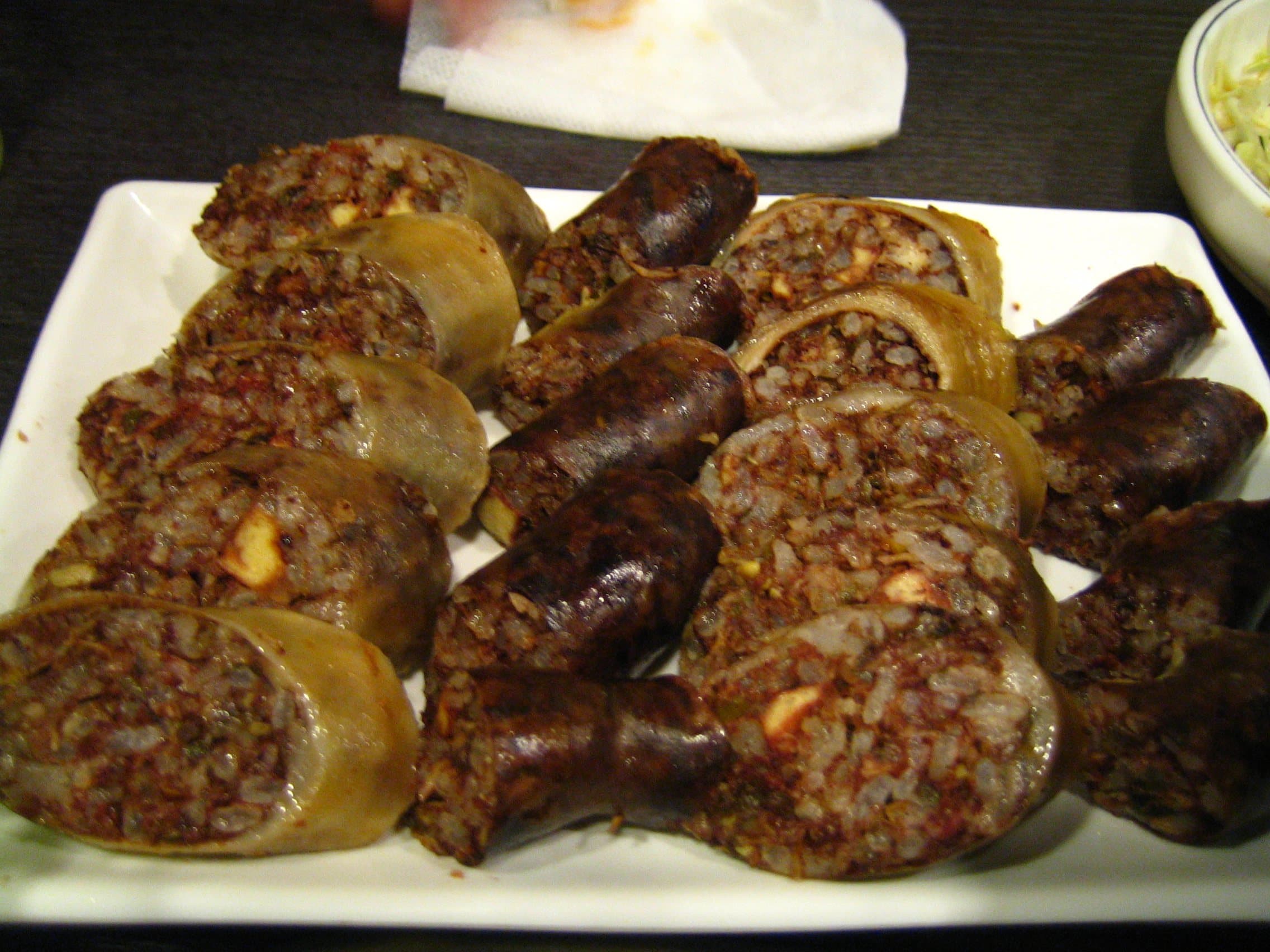
© Wikimedia Commons / ayustety · CC BY-SA 2.0
Sundae is pig intestine stuffed with glass noodles, blood and vegetables, then steamed. The principle matches European blood sausage, but what goes inside is entirely different. Korean sundae leans on glass noodles, which makes it soft and mild, and regional versions swap in glutinous rice, squid or pollock. At snack shops it sits beside tteokbokki; at markets it arrives as a rice soup.
The principle is simple: clean pig intestine, stuff it, then boil or steam. Versions of this exist worldwide — it is the cooking of an era when nothing from a slaughtered pig could be wasted, sharing roots with European blood sausage. What differs is the filling. Korean sundae builds on glass noodles, so it chews soft and tastes mild; blood contributes colour and a nutty depth but tends to be a supporting ingredient.
The filling changes by region. Gangwon's abai sundae stuffs squid bodies instead of intestine. Hamgyeong-style runs a high proportion of glutinous rice and eats heavy. Byeongcheon sundae packs in vegetables for a loose, mild interior, while Baegam sundae minces meat and vegetables fine for a dense one. Rather than arguing which is authentic, it is better read as each region solving the same principle with whatever was easy to get.
What comes with it often decides the impression. At a snack shop, sundae is simply steamed and served with salt or ssamjang and a ladle of tteokbokki sauce, usually with offal like liver and lung on the side. Plenty of people skip the offal, so "just the sundae, please" is a common order. At markets and specialist restaurants it arrives as sundaeguk: pork-bone broth simmered long, with sundae and offal in it and rice alongside. You season it yourself with salted shrimp, perilla powder and chili paste.
What you dip it in also splits by region. The capital area and most of the country use salt or ssamjang; parts of Jeolla use vinegared chili paste; Busan and parts of Gyeongsang use makjang or ssamjang; parts of Chungcheong use salted shrimp. It is a perennial regional argument online, though it is less a matter of right and wrong than of whichever condiment was common locally settling into the habit.
What comes with it
- Salt — the most common partner; sundae is lightly seasoned and assumes you will dip it.
- Ssamjang, vinegared chili paste or salted shrimp — varies by region; not a matter of correctness but of what was locally common.
- Liver and lung — the offal served alongside. If you would rather skip it, ordering "just the sundae" is standard.
- Tteokbokki sauce — dipping sundae into it at a snack shop is close to standard practice.
- Perilla powder and chili paste — added to taste when eating it as sundaeguk.
How to eat it
- 1Dip lightly in salt or whatever the local condiment is; the sundae itself is only lightly seasoned.
- 2If the offal puts you off, ask for "just the sundae" — it is a common order and nothing unusual.
- 3At a snack shop, dipping it in tteokbokki sauce is fine; plenty of people prefer it that way.
- 4For sundaeguk, season with salted shrimp rather than salt — it adds savouriness as well.
- 5As it cools the glass noodles firm up and go dry, so eat it as soon as it arrives.
FAQ
What is inside sundae?
Korean sundae is built on glass noodles, with blood and vegetables alongside, which makes it soft and mild. Regional versions raise the glutinous rice ratio or stuff squid bodies instead of intestine.
Is it the same as European blood sausage?
The principle is the same — filling an intestine and cooking it, and the background of wasting nothing from a slaughtered pig is similar too. But the filling is completely different: Korean sundae centres on glass noodles, so it is much softer and milder.
What do you dip it in?
It varies by region. The capital area and most of the country use salt or ssamjang; parts of Jeolla use vinegared chili paste; Busan and parts of Gyeongsang use makjang or ssamjang; parts of Chungcheong use salted shrimp. It is not right or wrong, just whichever condiment was locally common.
Can I have it without the offal?
Yes. "Just the sundae, please" is an extremely common order and nobody finds it odd. With sundaeguk, asking to leave the offal out is usually accommodated as well.
More dishes to try
태그