Soups & stews · Seoul
Seolleongtang
seolleongtang
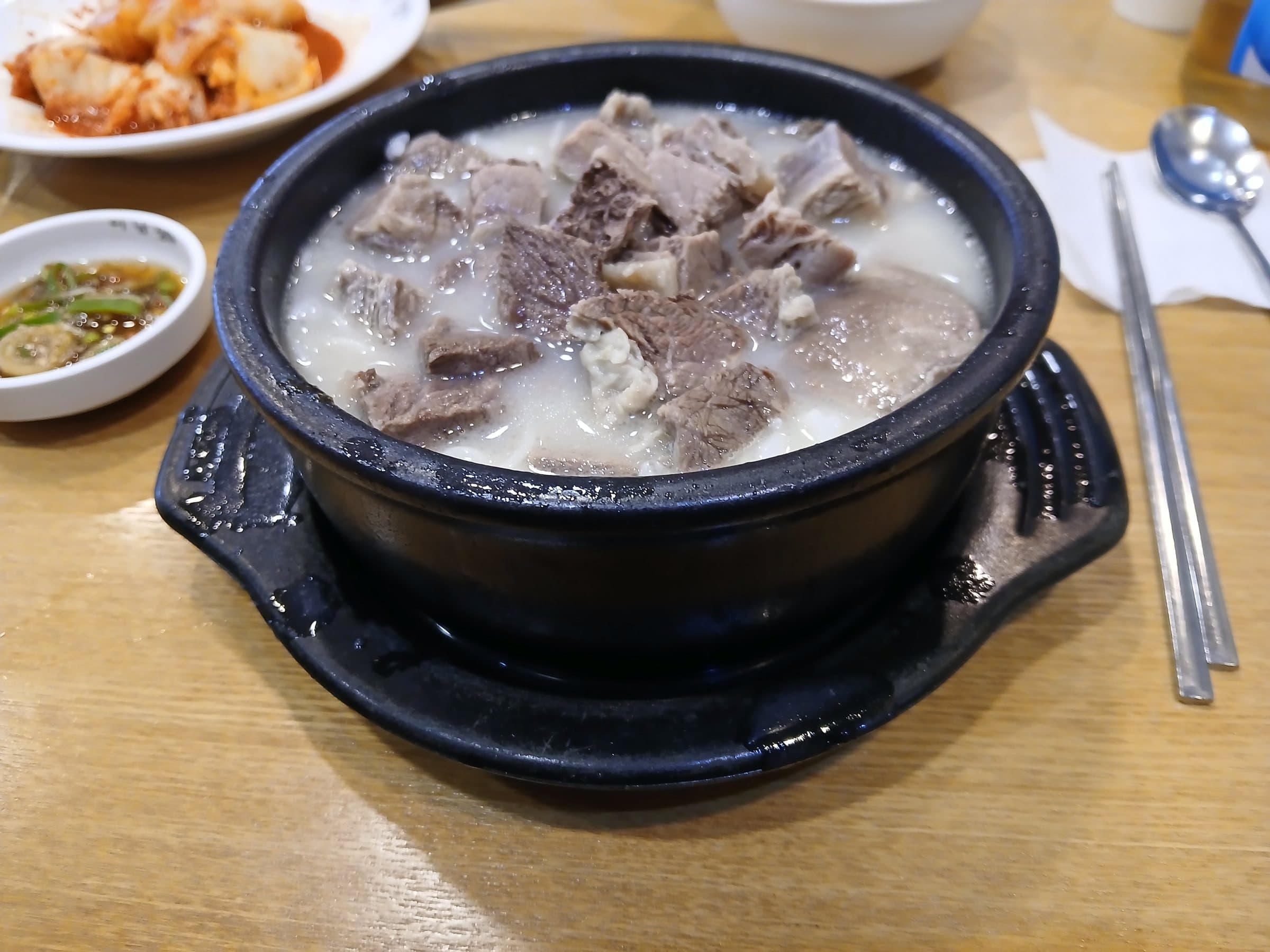
© Wikimedia Commons / 緑さん · CC0
Seolleongtang is a Seoul-style rice-and-soup dish in which ox bones and beef are simmered until the broth turns milky white. Its defining trait is that it arrives unseasoned. Salt, pepper and chopped spring onion sit on the table for you to adjust yourself, so the same pot yields a different bowl for every diner. The whiteness comes not from milk or cream but from bone components dispersing finely during the long simmer and scattering light.
It helps to start with why the broth is white. People sometimes assume milk was added; it was not. Boiling ox bones hard for hours disperses gelatin, fat and fine protein particles from bone and connective tissue throughout the water. Those particles scatter light in every direction, and the broth reads as milky. Simmer gently instead and it stays clear — a vigorous boil is what produces the white.
What separates seolleongtang from other rice-and-soup dishes is that it comes unseasoned. The first spoonful can be startlingly bland, and that is correct. Adjusting it yourself with the salt, pepper and chopped spring onion on the table is how the dish works. Add a little at a time and taste as you go: too much at once cannot be undone, and salt easily buries the nutty depth of the broth itself.
Among the sides, kkakdugi matters most. Seolleongtang restaurants tend to serve radish kimchi fermented far enough that its brine runs red, and many diners spoon some of that brine into the soup. The acidity cuts through a rich broth and pulls the flavour into focus. Rice may arrive already in the bowl or on the side; asking for it separately is usually no problem.
Many places add noodles too. A small nest of thin somyeon often shares the bowl with the rice, and because the broth is light rather than thick, the noodles sit in it comfortably. Seoul has a handful of seolleongtang houses approaching a century of operation, and their menus tend to be short — often just seolleongtang and boiled beef. That brevity is itself a statement: everything rests on the broth.
What comes with it
- Kkakdugi — deeply fermented radish kimchi; many spoon its brine in for acidity.
- Salt and pepper — the soup is unseasoned, so you adjust at the table. A little at a time.
- Chopped spring onion — provided generously; it cuts the richness of the broth.
- Cabbage kimchi — served alongside the kkakdugi, sometimes just the leaves without brine.
- Somyeon noodles — many places tuck a small nest into the bowl along with the rice.
How to eat it
- 1Taste a spoonful before seasoning. Knowing the base broth is what makes adjusting possible.
- 2Add salt gradually, tasting each time. Too much at once cannot be reversed.
- 3Add the spring onion and pepper — they organise the richness and lift the aroma.
- 4Try a spoonful of the kkakdugi brine. The acidity sharpens the broth considerably.
- 5Stir the rice in. If you prefer it on the side, just say so when ordering.
FAQ
Is the broth white because of milk?
No. Boiling ox bones hard for hours disperses gelatin, fat and fine protein particles through the water, and those particles scatter light in every direction, so the broth looks milky. A gentle simmer produces a clear broth instead.
Why does it taste of nothing?
Because it arrives unseasoned — that is how the dish works. Use the salt, pepper and spring onion on the table, adding a little at a time. Dumping salt in at once buries the nutty depth of the broth itself.
How is it different from gomtang?
The two are commonly explained as differing in the cuts used and how they are boiled, and definitions vary between restaurants. What you actually notice at the table is colour and body: seolleongtang is the bone-heavy, milky one, while many places serve gomtang as the clearer bowl.
Why do people add the kkakdugi brine?
For acidity. A sour note run through a rich, nutty broth pulls the flavour into focus and sharpens it considerably. That is also why seolleongtang houses use deeply fermented radish kimchi. Start with a single spoonful.
Pair it with a visit
More dishes to try
태그