Grilled & stir-fried · Nationwide
Yangnyeom chicken
yangnyeom-chikin
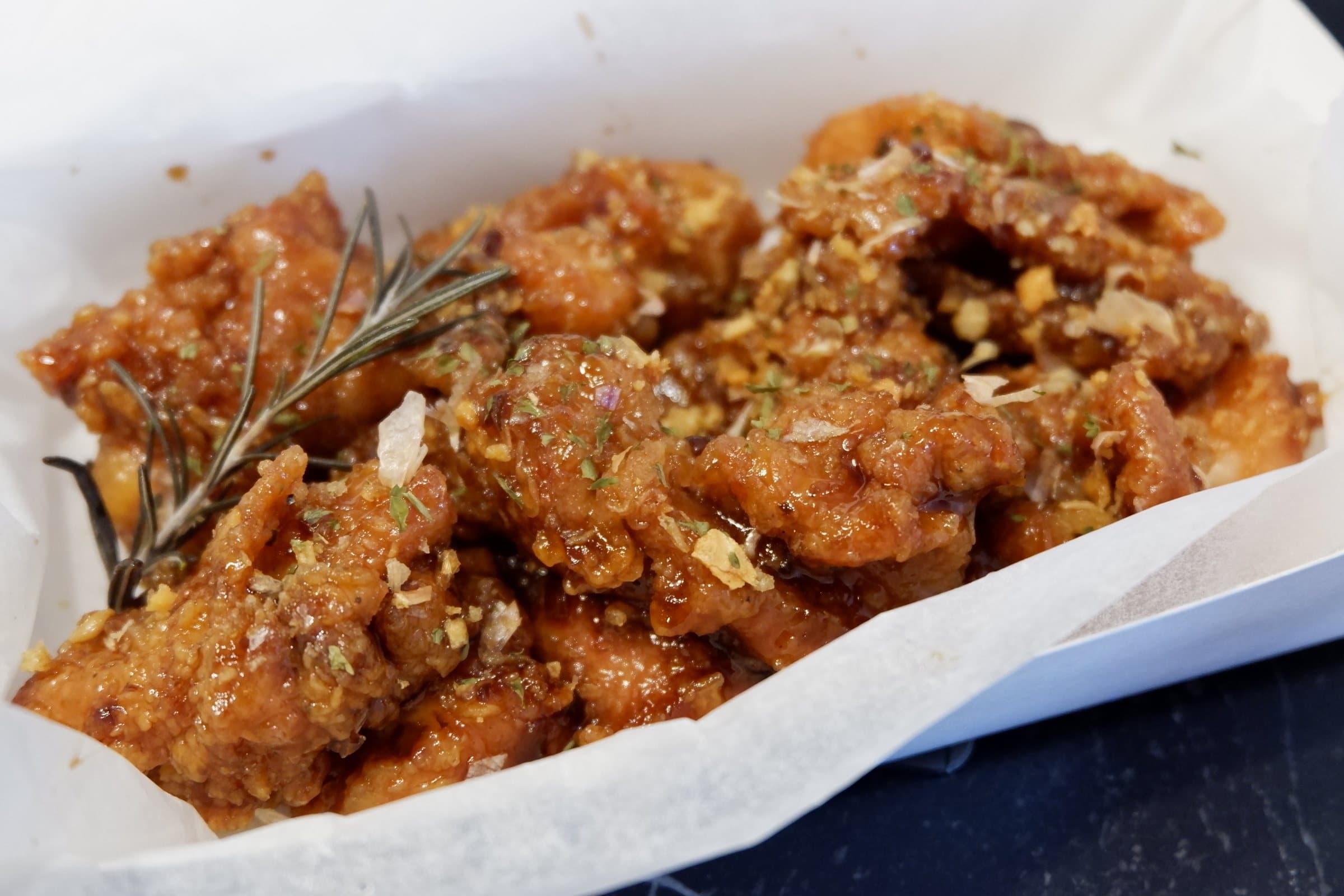
© Wikimedia Commons / Vee Satayamas · CC BY 2.0
Yangnyeom chicken is fried chicken tossed in a red sauce built on gochujang, corn syrup and garlic. The trick is reducing the sauce so it coats thickly without soaking the crust, and most versions lead with sweetness rather than heat. Ordering half plain and half sauced is a common habit, so a single box often arrives holding two different things.
Korean fried chicken differs from other traditions from the frying stage onward. Pieces are cut small, the batter is thin, and many shops fry twice: once to cook through, a brief rest, then again at high heat so surface moisture escapes and the crust turns far crisper. Yangnyeom chicken layers sauce onto that, which means a weak fry collapses the moment the sauce lands.
The sauce is typically gochujang reduced with corn syrup or oligosaccharide, minced garlic, ketchup and soy sauce. Ratios differ by shop, but reducing to raise viscosity is universal — pour a thin sauce over fried chicken and the crust drinks it and goes limp. A well-made yangnyeom chicken has sauce clinging to the skin like a glaze, and a piece lifted from the box does not drip.
Banban — half and half — is a defining habit. One bird fried half plain and half sauced, packed into a single box: the demand to have both was common enough that it became a menu item in its own right. Sweet-sour radish cubes arriving alongside is close to a rule, because they break the richness, setting up a rhythm of one piece of chicken, one cube of radish.
A large share of chicken is eaten as delivery, which leaves yangnyeom chicken with a sogginess problem in transit. Some people ask for the sauce packed separately to limit it. Opening the box the moment it arrives helps too — a closed box traps steam and softens the crust from inside. For leftovers, an air fryer or oven beats a microwave.
What comes with it
- Sweet-sour radish cubes — they break the richness and almost always come with it.
- Beer — the pairing is fixed enough to have its own word, chimaek; the carbonation rinses the oil.
- Cola — often bundled into delivery sets and a good match for the sweet sauce.
- Salt — sometimes included for dipping the plain half.
- Rice cakes — some shops toss a few in the same sauce and add them to the box.
How to eat it
- 1Open the box on arrival — a closed box traps steam and softens the crust.
- 2Eat the sauced pieces first; coated pieces go soggy faster than plain ones.
- 3Work the radish cubes in between pieces — they reset the palate against the richness.
- 4Try ordering banban. Alternating plain and sauced slows down how quickly you tire of it.
- 5Reheat leftovers in an air fryer or oven; a microwave turns the crust limp.
FAQ
Is it very spicy?
Sweetness usually leads. Gochujang is in there, but corn syrup, oligosaccharide and ketchup come with it, so sweet and savoury arrive first and the heat trails faintly behind. If you want genuine heat, order a dedicated spicy menu item instead.
What is banban?
It is one bird fried half plain and half sauced, packed in a single box. Wanting both was common enough that it became a menu item. Alternating between the two slows down how fast you tire of it.
Why does it go soggy?
The crust absorbs moisture from the sauce. Good shops reduce the sauce to raise viscosity so it sits like a glaze. For delivery, opening the box immediately to vent the steam helps, and you can ask for the sauce to be packed separately.
Why do the radish cubes always come with it?
Because they break the richness. Eating the sweet-sour radish between pieces resets your palate so you can keep going. That is why it accompanies almost every chicken order in Korea.
Pair it with a visit
More dishes to try
태그