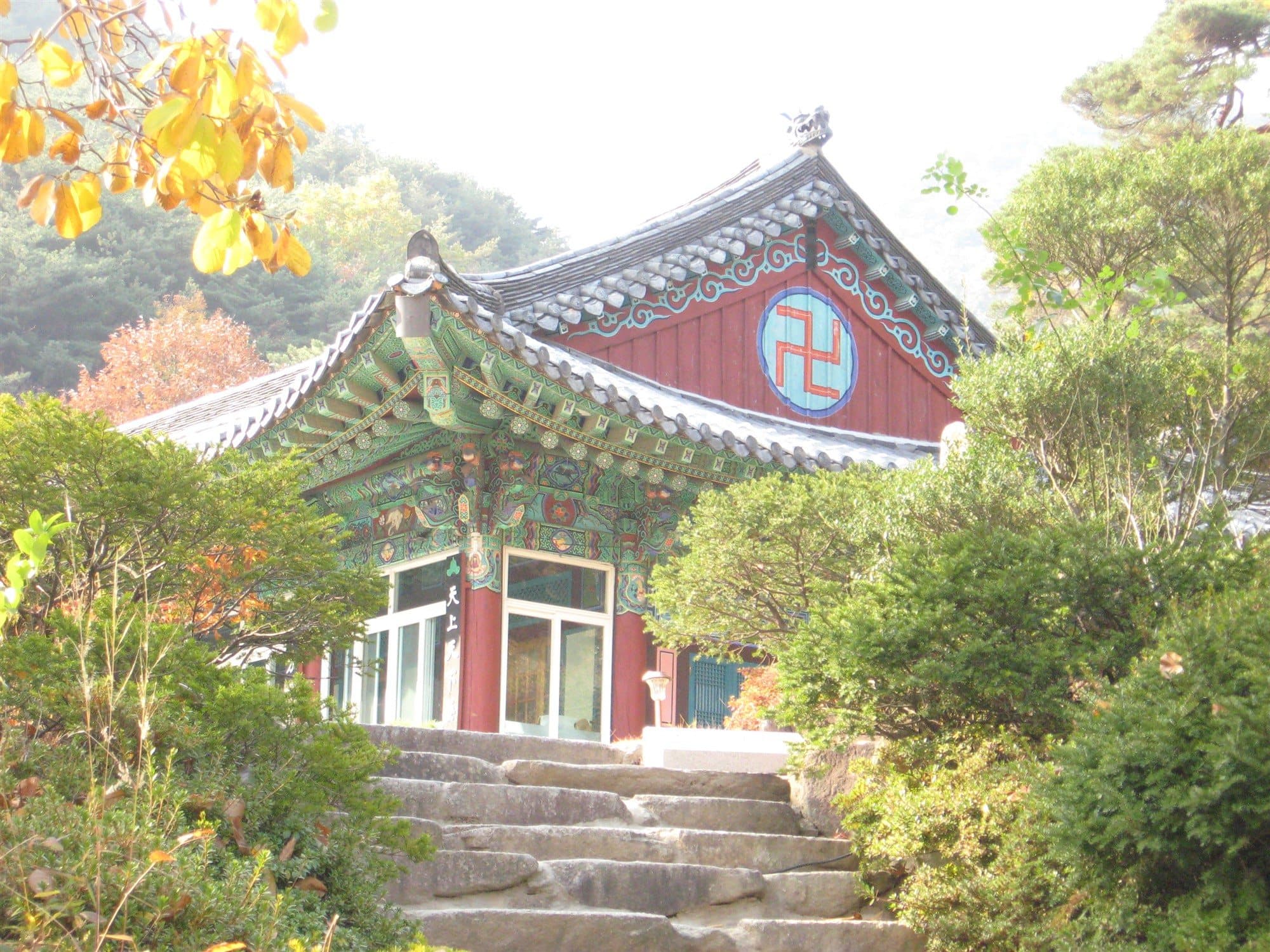
Read carelessly, the name invites a misunderstanding, because pagye sounds identical to the word for breaking monastic precepts. The temple's name uses different characters: to hold (把) and stream (溪). It means catching the water that scatters down the mountain in nine branches, and the account handed down with it is that the temple was founded on this spot to govern terrain where water leaked away in every direction. The reason the temple stands here is carried in its name.
Palgongsan is the ridge that wraps Daegu from the north. It is not far from the city by car, yet the sound changes once you enter the valley, and Pagyesa sits far enough in that the walk up from the car park is already a mountain path. Standing in the temple yard, the view opens ahead while the mountain closes behind — the arrangement most Korean mountain temples choose. Instead of spreading wide on flat ground, they use the slope as it is and seat the buildings on stepped terraces.
Palgongsan holds more than one temple. Donghwasa is larger, and the stone seated Buddha at Gwanbong — known as Gatbawi — sits near the summit, drawing a steady stream of people climbing to make a wish year-round. The whole mountain is effectively filled with old Buddhist remains, so a few days in Daegu can be planned as choosing temples around a single mountain. Pagyesa is on the quieter side of that choice.
Autumn is the season it is known for. The Palgongsan ring road draws enough traffic during the foliage weeks to back up, and the road climbing to Pagyesa turns yellow and red as well. Bear in mind that a temple is a place of worship and practice: keep quiet inside the halls, and do not photograph monks or worshippers head-on. Setting up a tripod in the yard is also best avoided.