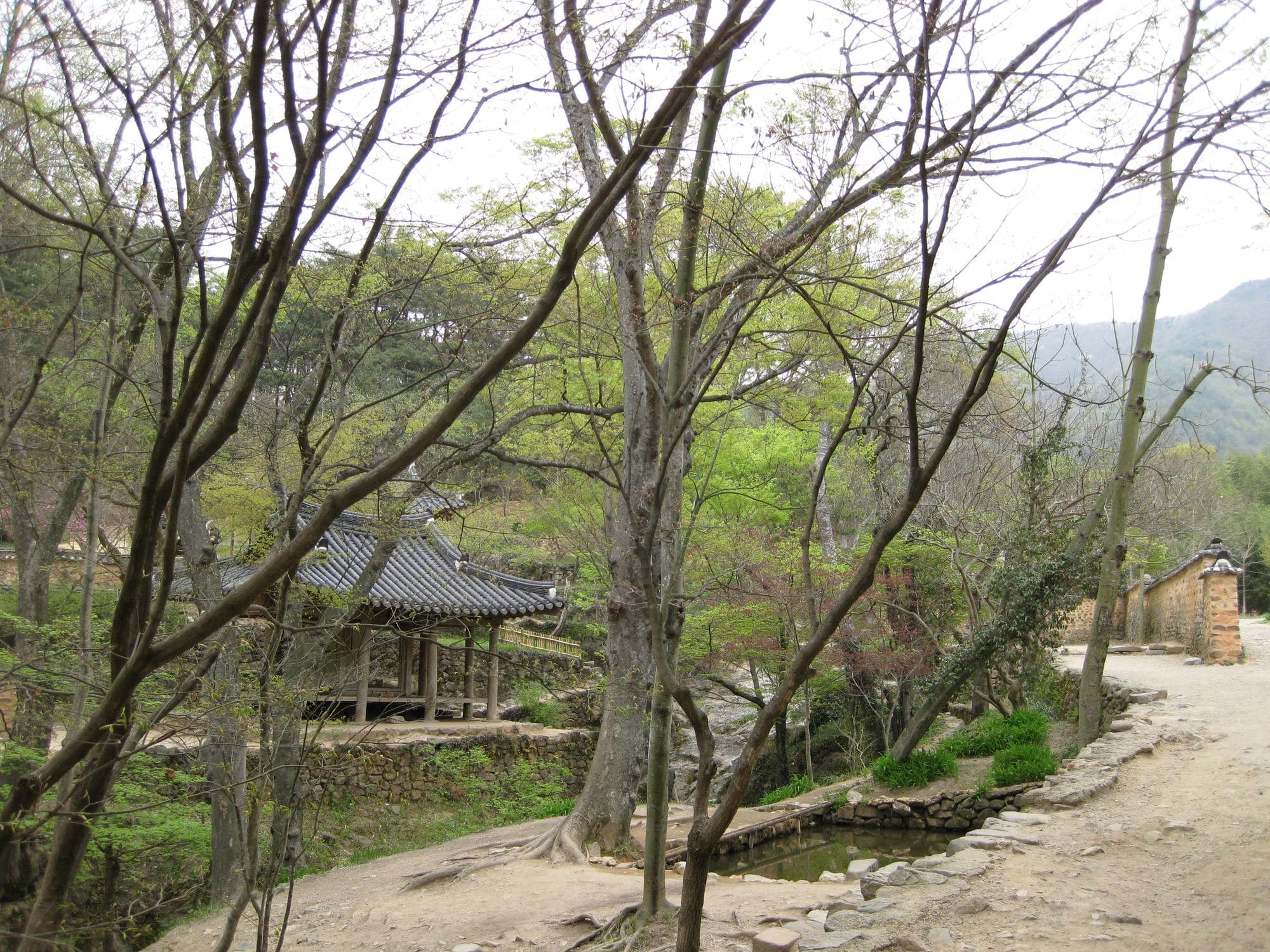
The quickest way into Soswaewon is to notice how it differs from other gardens. The usual idea of a garden is ground cleared, trees planted and a pond dug to compose something new; Soswaewon is closer to the opposite. Where the stream ran and the rocks sat, they were left, and places for people were fitted among them. Walking through it, the line between what is natural and what is built stays deliberately blurred.
The most striking device is the wall. It crosses the stream, but the section where the water passes is left open beneath, so the stream runs under it. The wall divides the space without stopping the water. Because of this, the sound of the valley carries into the inner garden and the two sides never fully separate. Reading the relationship between the water and the wall first, before the buildings, is the faster route to understanding the place.
Two buildings anchor it. A pavilion low near the stream and a house on flatter ground slightly above look at the garden from different heights. From below, the water runs right in front of you; from above, the whole garden reads at once. It is the same garden arranged so that where you sit determines what you see. The buildings are small enough to seem plain at first, but moving between them shows why each stands where it does.
The impression shifts sharply with the season. Summer brings thick foliage and full water, and the garden stays cool; autumn sets colour against the walls; winter strips the leaves so the landform and the lines of the wall show plainly and the structure becomes legible. Lush summer is the version most photographed, but for reading how the garden is put together, the bare season has its own case. Damyang's metasequoia road and bamboo forest are close by and pair easily into one route.