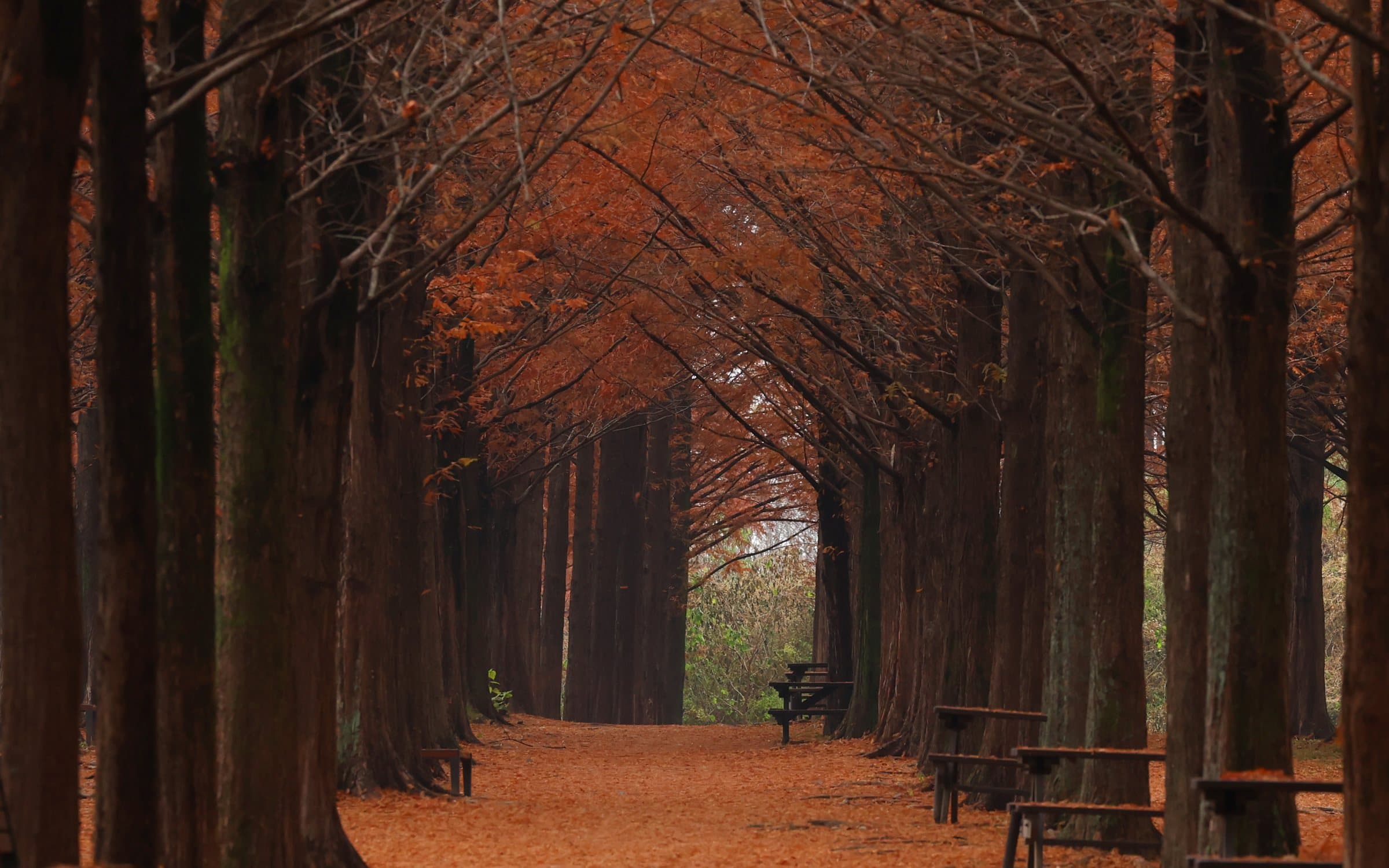
The metasequoia was once known only as a fossil. Living specimens were found in China in the mid-twentieth century, earning it the nickname living fossil, and it spread to many countries as a street tree. Damyang planted its rows in the 1970s under a roadside planting programme, and because the species grows fast and straight, a few decades produced what stands today. None of it was planned as scenery; they were simply trees put along a road.
How the road became a walking path is the interesting part. It was a national highway, and a widening plan raised the prospect of felling the trees. After debate, a bypass was built instead and this stretch was closed to cars. The trees survived, and people started walking where the traffic had been. Given how well known the road is now, the call looks obviously right — but at the moment of weighing one row of trees against a wider highway, nobody could have known that.
The road becomes a different place with the season. In spring and summer the foliage closes into a green tunnel with deep shade, cool even at midday. In autumn the leaves turn brick red and then fall to carpet the path, which is the version most widely photographed. In winter, bare trunks and branches make the structure of the trees legible. Metasequoia is one of the few conifers that sheds its leaves, which is why the change is this dramatic.
Damyang is also known for bamboo. Juknokwon is ten minutes away by car and is usually visited in the same trip, and the old embankment forest at Gwanbangjerim is nearby too. Regional dishes like tteokgalbi and daetongbap cluster in the same area. The metasequoia road itself takes about an hour there and back, so if you give Damyang a full day, combining those three is the standard structure.