Jeolla · Nature & Scenery

Maisan

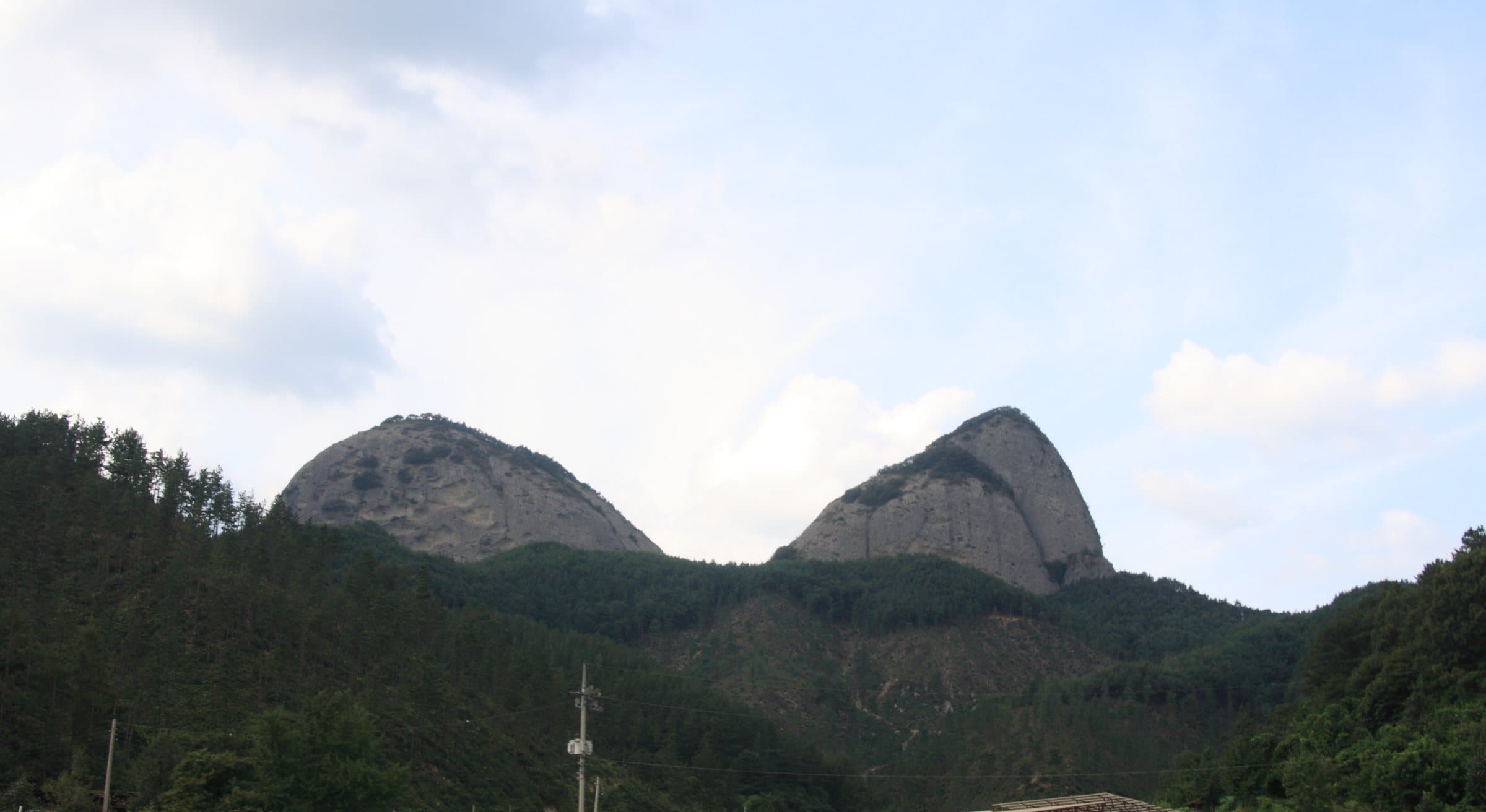
Maisan, in Jinan, North Jeolla, takes its name from two rock peaks rising side by side like a horse's ears. Amid otherwise soil-covered hills, only these two stand exposed in pale grey stone, recognisable at a distance in a single glance. Their surfaces are pocked as though studded with pebbles — because the mountain is conglomerate, gravel cemented into rock.

말의 귀처럼 나란히 솟은 마이산의 두 바위 봉우리

© Wikimedia Commons / Joachim Dirauf · CC BY 3.0

How's this place?

What makes Maisan unusual is the rock itself. The mountain is conglomerate — gravel pressed and cemented together with mud and sand into sedimentary stone — so up close the peaks show pebbles of every size embedded in the surface. Unlike the soil hills around it, this material held out against erosion far longer, and two masses were left standing. The strange shape is not an aesthetic accident; it is a difference in stone.

The peaks are called Ammaibong and Sumaibong. Standing side by side, they differ slightly in height and form, so the impression shifts with your angle. From out on the Jinan plain the two ears separate clearly; approach closely and they read as one large cliff. Maisan really wants to be seen twice — once from a distance and once from beneath.

In the valley between the peaks stands Tapsa, a temple surrounded by stone pagodas built up from natural stones one at a time. They are known for having stood a long time without mortar holding them. Various explanations circulate for why they have not fallen, but the method of construction is not settled in the documentary record. Seen in person, the scale and density differ from what photographs suggest.

Cherry blossom and moss phlox ring the mountain in spring, autumn colour in the season after. Moss phlox planted on the slope below the peaks gives the spring composition many people come for: two peaks seen across a field of pink. The trails include long stair sections that tax the legs even when short, and access to the summit stretches is restricted at times, so it is worth checking before you go.

Visitor tips

  • See it twice — from a distance and from beneath. The two peaks read completely differently by range.
  • Look closely at the rock face; the embedded gravel of the conglomerate is visible to the eye.
  • Visit Tapsa in the valley between the peaks — the stone pagodas are not what photographs suggest.
  • Spring brings moss phlox, autumn the colour; in spring the peaks sit beyond a field of pink.
  • There are long stair sections, and summit access is sometimes restricted — check before going.

FAQ

Why are only these two peaks bare rock?

The stone is different. Both peaks are conglomerate — gravel cemented into rock — which is far harder than the surrounding soil hills and resisted erosion much longer, leaving these two masses standing.

What are the knobbly marks on the rock face?

Embedded gravel. Maisan is conglomerate: sedimentary rock formed as pebbles were pressed and cemented together with mud and sand. Up close you can see stones of every size sitting in the surface.

How do the stone pagodas at Tapsa stand?

They are known to be natural stones stacked without mortar, and their long endurance is the point people note. The construction method is not settled in the documentary record, though, so it is more accurate to treat the explanations as unresolved.

Is the hike hard?

The distance is not long, but there are extensive stair sections that tax the legs. Access to the summit stretches is also restricted at times, so it is worth checking before you visit.

367 Maisannam-ro, Maryeong-myeon, Jinan, Jeollabuk-do

Handy tools for your trip & stay

More places nearby

Tags

#Maisan#Jinan#conglomerate peaks#Tapsa#moss phlox

Been here? Leave a comment

Post anonymously without login. You can delete your comment anytime from this browser. Please avoid abuse, ads, and personal info.