Gyeongsang · Nature & Scenery

Upo Wetland

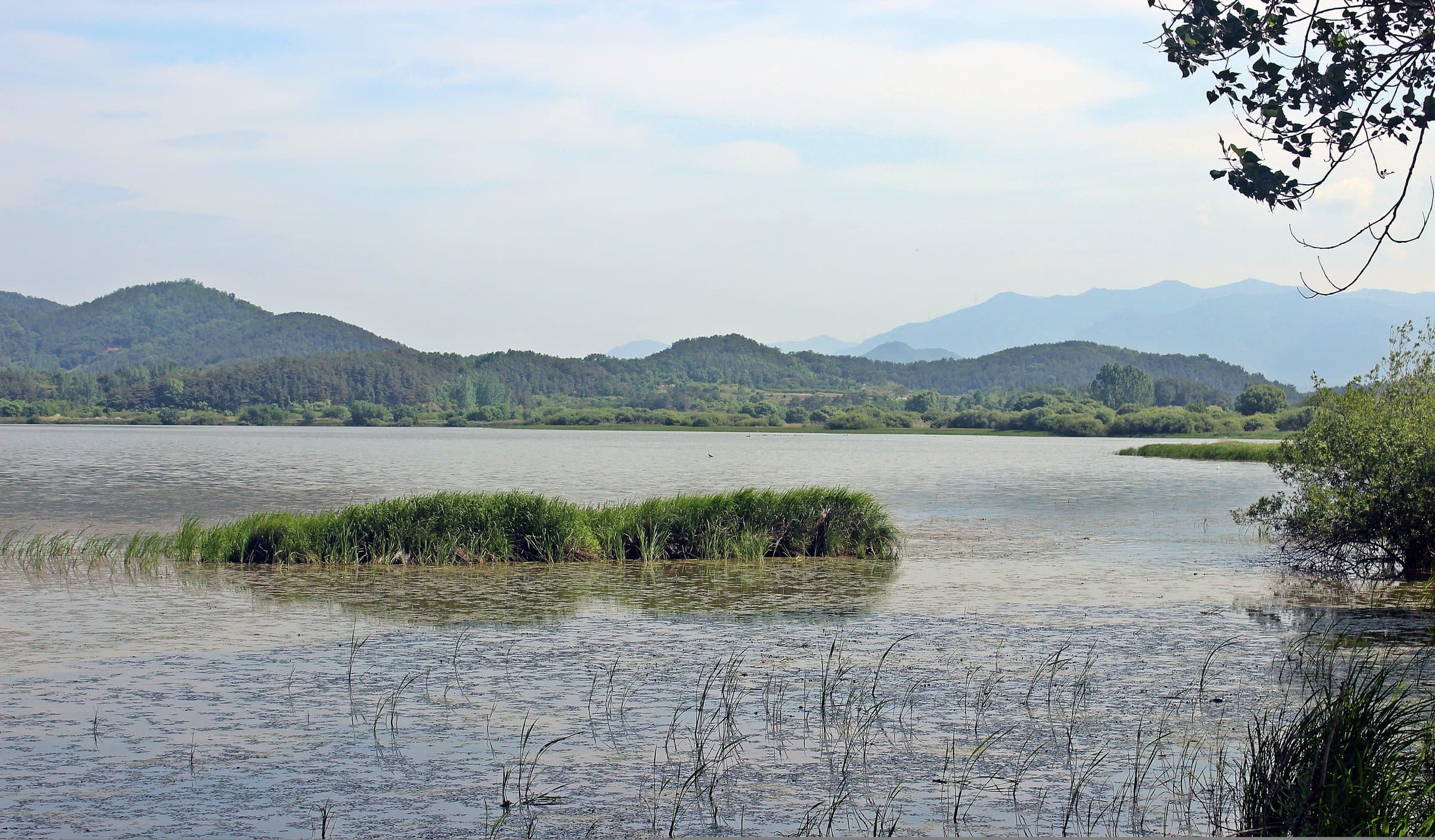
Upo is the largest natural inland wetland in South Korea, in Changnyeong, South Gyeongsang. It is not a reservoir but water left behind as the Nakdong River shifted its course and then held in place for a very long time, so the landform itself is old. Rafts of grass float on the surface with birds settling among them, the scene changing with the season, and winter brings a large increase in migratory birds.

물 위에 풀섬이 떠 있는 우포늪과 뒤편 산줄기

© Wikimedia Commons / 최옥석 · CC BY-SA 3.0

How's this place?

What separates Upo from other bodies of water is that it was left rather than made. As the Nakdong River shifted its channel over time, water cut off from the main stream settled into low ground and stayed. No embankment holds it — this is where the river used to run — so the sediment beneath and the ecosystem above it formed over a very long span. That is why the phrase "a living natural history museum" attaches to the place so often.

A marsh is not a lake. The water is shallow enough for light to reach the bed, so plants grow underwater, and when water plants tangle root and stem into mats they read as islands of grass floating on the surface. That shallowness is the condition for the biodiversity. Fish, aquatic insects and water plants layer into one another with birds settling on top, so an equivalent area of deep lake holds far less life.

It becomes a different place by season. Spring and summer green the surface with water plants; autumn rings the edges with reeds and silver grass; winter opens the water and brings a large increase in migratory birds. If birdwatching is the point, winter is overwhelmingly better; if the scenery is, early morning when mist rises off the water is the time. Marshes have a wide morning temperature gap and fog often forms — that image is the one most people know Upo by.

The trail runs around the edge and circling the whole thing takes a while. You can rent an electric bicycle, or simply walk one section. Visiting the ecology centre first, to see how the landform came about, changes how you read the shape of the water afterwards. Since protection of wildlife comes first here, staying off the water's edge and keeping noise down are basic courtesy — more so in winter when the migratory birds are in.

Visitor tips

  • For birdwatching, winter is overwhelmingly better — the migratory population rises sharply.
  • For scenery, go early. Mist rising off the water in the morning temperature gap is the image the place is known for.
  • A full circuit is long. Rent an electric bicycle or simply walk one section.
  • Seeing the ecology centre first tells you how the landform survived, which changes how the view reads.
  • Stay off the water's edge and keep noise down — especially in winter when the migratory birds are in.

FAQ

Is Upo an artificial reservoir?

No. As the Nakdong River shifted channel over a long span, water cut off from the main stream settled into low ground and remained. No embankment holds it — this is where the river ran — so the sediment and the ecosystem above it formed over a very long time.

How is a marsh different from a lake?

Depth. A marsh is shallow enough for light to reach the bed, so plants grow underwater. That shallowness lets fish, aquatic insects and water plants layer into one another with birds on top, so it holds far more life than a deep lake of the same area.

When should I visit?

It depends on your aim. For migratory birds, winter is overwhelmingly better; for scenery, early morning when mist rises off the water. Spring and summer green the surface with water plants, and autumn rings the edges with reeds and silver grass.

How long does a full circuit take?

Circling the whole wetland takes a while. Renting an electric bicycle is one option, and walking just one section is common. Seeing the ecology centre first means you go out knowing how the landform came about, which changes what you notice.

220 Upo-neup-gil, Yueo-myeon, Changnyeong, Gyeongsangnam-do

Handy tools for your trip & stay

More places nearby

Tags

#Upo Wetland#inland marsh#Changnyeong#birdwatching#morning mist

Been here? Leave a comment

Post anonymously without login. Please avoid abuse, ads, and personal info.